
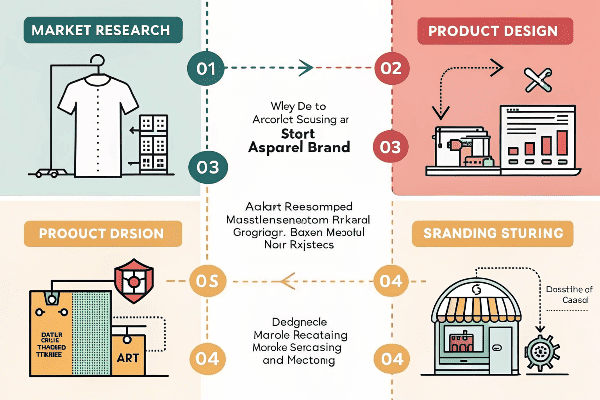
Starting your own apparel brand can be exciting and daunting at the same time. The fashion industry is constantly evolving, and the competition is fierce. But with the right mindset and strategies, you can turn your vision into a successful brand. Many new entrepreneurs reach out to me asking, "How do I start my own apparel brand?" It’s a great question that involves many steps, from concept to production to marketing.
To start your own apparel brand, you need to follow key steps: define your brand identity, source suppliers, create designs, set up your online store, and market your products. It takes planning, creativity, and perseverance.
I remember when I launched my first collection. It wasn’t easy, and there were many late nights. But the process taught me valuable lessons that helped my brand grow. With the right approach, you can build your apparel brand step by step.
Table of Contents
- Step 1: Define Your Brand Identity
- Step 2: Design Your Clothing Line
- Step 3: Find Reliable Manufacturers
- Step 4: Set Up Your Online Store
- Step 5: Price Your Apparel
- Step 6: Market Your Apparel Brand
- Step 7: Grow Your Brand
- Conclusion
Step 1: Define Your Brand Identity
The first and most important step is to define your brand. Before you dive into designing, you need to understand what your brand stands for.
Your brand identity includes your mission, values, target audience, and unique selling points. It’s how people will perceive your brand and what makes it stand out from others.
- Mission: Why does your brand exist? What problem are you solving for customers?
- Values: What do you stand for? Are you focused on sustainability, quality, or affordability?
- Target audience: Who are you designing for? Understand their needs and lifestyle.
- USP (Unique Selling Proposition): What sets you apart from competitors?
I started by asking myself, "What do I want my brand to represent?" I wanted my brand to reflect creativity and quality, which made it easy to build a mission and message that resonated with my target audience.
Step 2: Design Your Clothing Line
Once your brand identity is clear, it’s time to get creative and start designing your clothing line.
The design process involves brainstorming ideas, sketching concepts, and selecting fabrics. Think about the styles, patterns, colors, and fit that will appeal to your audience.
- Research trends: Stay updated with fashion trends, but also think about timeless designs.
- Sketch your ideas: Start with rough sketches to visualize your concepts.
- Create a mood board: Collect images, fabrics, and color palettes that inspire your collection.
- Fabric selection: Choose fabrics that match your brand’s aesthetic and comfort level.
I found sketching ideas on paper helped me to see the bigger picture. When I sourced fabrics, I ensured that they matched the quality I envisioned for my pieces.
Step 3: Find Reliable Manufacturers
Finding the right manufacturers is critical to producing high-quality apparel. You can either work with local manufacturers or source suppliers from countries known for apparel production.
Research and choose manufacturers who align with your brand values, such as sustainability, quality, and fair labor practices.
- Start with a list: Use directories like Alibaba, attend trade shows, or ask for recommendations from others in the industry.
- Request samples: Always order samples before placing bulk orders to ensure quality.
- Negotiate prices: Discuss production costs, timelines, and terms clearly.
- Consider MOQs (Minimum Order Quantities): Some manufacturers require a minimum order, which may be higher for first-time orders.
When I first searched for a manufacturer, I made sure to get multiple quotes and test samples before committing. It saved me from potential disappointments later on.
Step 4: Set Up Your Online Store
In today’s digital age, having an online presence is essential. Setting up an e-commerce store allows you to reach a global audience.
Platforms like Shopify, WooCommerce, or Etsy make it easy to set up a professional online store. You’ll need to choose a platform, design your website, and integrate payment methods.
- Choose a platform: Shopify is great for beginners, while WooCommerce offers more flexibility.
- Design your website: Create a clean, user-friendly design that reflects your brand identity.
- Add payment gateways: Ensure you can accept payments from customers globally (PayPal, credit card, etc.).
- Stock management: Keep track of inventory to avoid overstocking or running out of products.
I used Shopify when I started my store. It was simple to set up, and I could easily customize my store to fit my brand.
Step 5: Price Your Apparel
Pricing your apparel correctly is a crucial step. If you price too high, you might scare off customers. If you price too low, you might not make enough profit.
Consider your manufacturing costs, overhead, target market, and competitor pricing when setting prices for your products.
- Cost of goods sold (COGS): Calculate your manufacturing cost, including materials, labor, and shipping.
- Margins: Typically, apparel brands aim for a 50–60% markup, depending on the product.
- Competitor research: Check similar brands to understand market pricing.
- Profit margin: Make sure you factor in all business costs (marketing, website fees, shipping).
I spent time calculating the cost of each product and determining the margin I needed to stay profitable. Don’t forget about shipping costs, as they can add up quickly!
Step 6: Market Your Apparel Brand
Marketing is where you’ll make your brand known to your target audience. Social media, email marketing, and collaborations are excellent ways to build brand awareness and attract customers.
Utilize social media platforms like Instagram, Facebook, and Pinterest to showcase your apparel, run ads, and engage with potential customers.
- Social media marketing: Post regularly, use hashtags, and engage with followers.
- Influencer collaborations: Partner with fashion influencers to promote your brand.
- Email marketing: Send updates, promotions, and new launches to build a loyal customer base.
- Content marketing: Start a blog to share fashion tips, trends, and brand stories.
I remember when I first started running ads on Instagram. I saw an immediate increase in sales, and people started noticing my designs. Marketing helped me build a community around my brand.
Step 7: Grow Your Brand
As your apparel brand grows, keep expanding your product range, improving your website, and engaging with your community. Don’t forget to track sales and customer feedback to understand your market better.
Continuously innovate your designs, look for new trends, and focus on customer loyalty to ensure long-term success.
- Expand your product line: Introduce new colors, styles, or even accessories.
- Customer feedback: Listen to your customers for improvements and new product ideas.
- Global expansion: Once you’ve built your brand locally, consider expanding internationally.
I always believe in reinvesting in my brand. It allows you to scale and keep the momentum going. Keep listening to your customers, and your brand will keep growing.
Conclusion
Starting your own apparel brand is a rewarding journey, but it requires hard work, creativity, and the right strategy. By defining your brand identity, designing high-quality clothing, finding reliable manufacturers, setting up an e-commerce platform, and marketing your products effectively, you can build a successful brand from the ground up. Don’t forget to stay adaptable and keep improving. Your journey will be unique, but it can lead to great success.
[^1]: Shopify – How to start your clothing store
[^2]: WooCommerce – Setting up your apparel store