
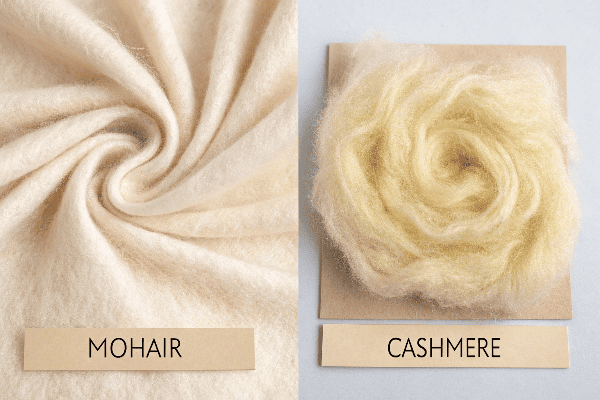
I used to think mohair and cashmere were the same because both feel soft. When I began to work with fabrics, I found they are very different.
Mohair and cashmere are both luxury fibers, but cashmere is softer, warmer, and finer. Mohair is shinier, stronger, and cooler. Which is better depends on use and personal taste.
I still remember the first time I held both fabrics in my hand. The feel was different right away.
Table of Contents
- What is the main difference between mohair and cashmere?
- Is mohair more durable than cashmere?
- Is cashmere softer than mohair?
- Does mohair cost less than cashmere?
- Which fabric is better for sweaters?
- Which one should I choose?
- Conclusion
What is the main difference between mohair and cashmere?
I always start with fiber structure.
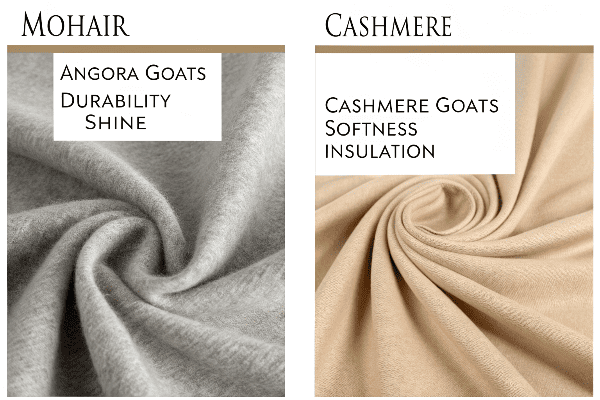
Cashmere comes from the soft undercoat of cashmere goats. Mohair comes from the long hair of Angora goats. Cashmere is finer and warmer, while mohair is more durable and glossy.
Fiber and feel
These are the key points I learned when choosing fabrics:
- Softness: Cashmere feels like a cloud. Mohair is soft but a bit more silky than fluffy.
- Warmth: Cashmere holds heat well. Mohair is lighter and cooler.
- Strength: Mohair fibers are strong and resist wear. Cashmere is delicate.
| Feature | Mohair | Cashmere |
|---|---|---|
| Origin | Angora goat | Cashmere goat |
| Touch | Silky, shiny | Soft, smooth, matte |
| Warmth | Medium | High |
| Durability | Very strong | More delicate |
You can read more about these fabrics in FabricLink’s fiber guide (F1).
Is mohair more durable than cashmere?
Yes. I see it every time I use these fabrics.
Mohair is more durable and elastic than cashmere. It resists wear, holds shape, and can last many years with care. Cashmere feels softer but needs more gentle use.
I have sweaters made from mohair that look new after five years. Cashmere sweaters need more careful washing.
For detailed care instructions, check The Laundress guide (F2).
Is cashmere softer than mohair?
This is the part most people notice first.
Cashmere is softer than mohair because its fibers are thinner. Mohair feels silky but can be slightly itchy if blended with coarse fibers.
I often choose cashmere for scarves because it feels comfortable on bare skin. Mohair is great for outerwear or knits that do not touch the skin directly.
Does mohair cost less than cashmere?
Price is an important factor.
Mohair usually costs less than cashmere because it is more abundant and faster to produce. Cashmere is rarer and comes from a limited supply of goats.
In my experience, pure cashmere yarn is often double or triple the price of good mohair. Luxury brands sometimes blend mohair and cashmere to balance cost and quality.
Market pricing reports from Statista (F3) confirm this trend.
Which fabric is better for sweaters?
It depends on what I want in a sweater.
For soft and warm sweaters, I choose cashmere. For durable sweaters that keep their shape and have a glossy look, I choose mohair.
I like to use mohair blends for oversized knits because the fabric stays strong. Cashmere is my first choice for fine, close-to-skin sweaters.
Which one should I choose?
The choice depends on how I use it.
I choose cashmere when I want soft, light warmth. I choose mohair when I want shine, durability, and texture. Both are premium, but they serve different purposes.
If I make a formal coat, mohair is perfect. If I make a winter sweater or a scarf, I prefer cashmere.
If you are sourcing premium knitwear, specialized OEM clothing factories like Dec Garment (F4) can supply both fabrics.
Conclusion
Cashmere feels softer and warmer. Mohair is stronger and shinier. Both are luxury fibers, but they serve different needs.
F1: FabricLink – Comprehensive fiber and fabric education resource.
F2: The Laundress – Expert guide on washing and caring for wool and cashmere.
F3: Statista – Market data on mohair vs cashmere pricing.
F4: Dec Garment – OEM/ODM knitwear manufacturer offering mohair and cashmere blends.