You put on a new pair of work pants—too tight, and you can’t bend. Too loose, and they snag or slide. So what’s the right fit? Should work pants be tight or loose?
Work pants should fit comfortably—not too tight or too loose. They should allow full range of motion while staying secure at the waist and legs. The ideal fit depends on your job type, but freedom of movement and safety come first.
I’ve worked with factories that produce everything from construction trousers to office-ready workwear. Across the board, good fit is about function—helping you move, stretch, and stay safe without discomfort.
Table of Contents
- What happens if work pants are too tight?
- What are the risks of pants that are too loose?
- What is the ideal fit for work pants?
- How to choose fit based on your work type?
- Conclusion
What happens if work pants are too tight?
Tight pants restrict your movement and pose safety risks.
Pants that are too tight can cause discomfort, limit mobility, and may tear during squatting, bending, or climbing. They also restrict airflow, which can be a problem in hot conditions.
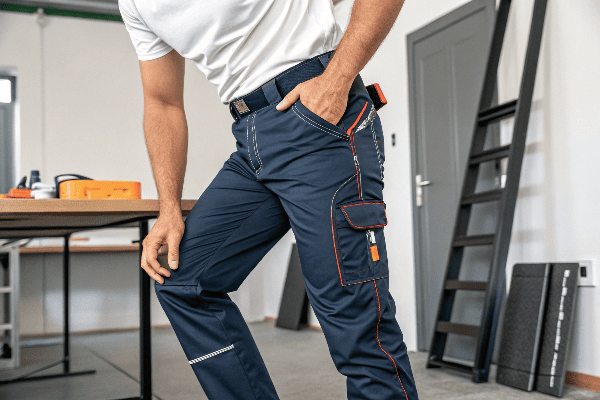
Problems with tight work pants
| Issue | Effect |
|---|---|
| Restricted movement | Harder to squat, kneel, or lift |
| Skin irritation | Chafing at waist, thighs, or knees |
| Fabric tension | Increased risk of tearing |
| Circulation issues | Can lead to discomfort or numbness |
| Reduced ventilation | Hotter and sweatier throughout the day |
Tight-fitting pants might look sleek, but they rarely perform well on active job sites[^1].
Related reading: Why fit matters in safety clothing – OSHA guidelines[^2]
What are the risks of pants that are too loose?
Loose pants can be a safety hazard.
If your pants are too baggy, they can get caught in machinery, tools, or trip you during fast movements. They also tend to sag or slide down when carrying heavy loads.
Why overly loose isn’t ideal
- Snag risk: Pants can catch on nails, corners, or tools
- Tripping: Excess length around the ankle can cause falls
- Poor weight distribution: Tools in loose pockets swing more
- Unprofessional appearance: May not meet workplace dress codes
- Discomfort: Constantly adjusting the waistband or cuffs
Learn more: Workplace clothing safety tips – Canadian Centre for Occupational Health[^3]
What is the ideal fit for work pants?
Somewhere in the middle—tailored but flexible.
Work pants should sit securely at the waist, provide room in the thighs and knees, and taper slightly without restricting movement. Look for features like gussets, stretch fabric, or articulated knees.
| Fit Feature | Why It Matters |
|---|---|
| Mid-rise waistband | Stays in place when bending |
| Straight or relaxed fit | Allows flexibility in movement |
| Reinforced knees | Extra room for kneeling or squatting |
| Stretch panel/gusset | Prevents pulling at stress points |
| Proper inseam length | Reduces drag and ankle bunching |
Guide: Choosing the right work pants by Dickies[^4]
How to choose fit based on your work type?
Let the job dictate the flexibility you need.
Construction workers and electricians need more room and durability. Office workers may prefer slim-fit trousers with stretch. Landscapers or warehouse staff benefit from cargo styles with reinforced knees.
| Job Type | Recommended Fit |
|---|---|
| Construction | Relaxed or utility fit |
| Warehouse/Logistics | Straight fit with stretch |
| Office/Sales floor | Slim-fit with breathability |
| Mechanic/Repair | Loose upper leg + gusset |
| Outdoor field work | Articulated or cargo style |
Always try them on and test movement before committing.
Conclusion
Work pants shouldn’t be too tight or too loose. Aim for a comfortable fit that allows flexibility, supports your tasks, and meets safety standards. The best work pants help you move freely—without adjusting them all day.
[^1]: Poorly fitted workwear increases workplace accident risk, especially in industrial settings.
[^2]: OSHA PPE guidelines emphasize proper fit as a key element of safety equipment.
[^3]: CCOHS highlights the danger of loose-fitting clothing around machines and tools.
[^4]: Dickies offers workwear fit advice based on decades of clothing design for labor-intensive jobs.