
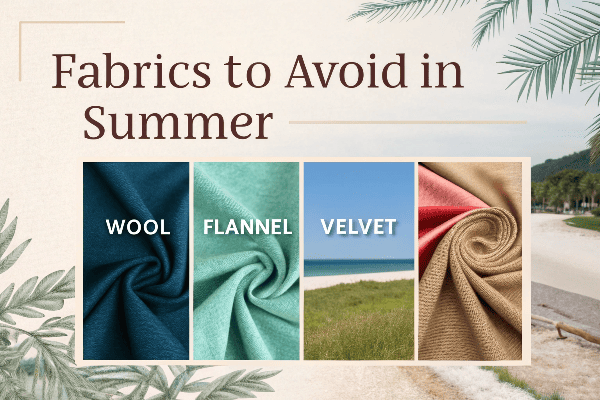
It’s 90 degrees outside, the sun is blazing, and you’re sweating through your clothes. If you feel sticky, hot, or uncomfortable, it might not be the heat—it might be your fabric.
In summer, avoid fabrics like polyester, nylon, vinyl, fleece, and heavy denim. These materials trap heat, reduce airflow, and make sweating worse. Instead, go for lightweight, breathable, and moisture-wicking fabrics like cotton, linen, or bamboo.
I’ve developed summer collections for apparel brands, and the fabric choice always makes or breaks the comfort level. The wrong material can turn a stylish outfit into a heat trap[^1].
Table of Contents
- Why do some fabrics feel worse in hot weather?
- Which fabrics should you avoid in summer?
- What fabrics are better alternatives in summer?
- Conclusion
Why do some fabrics feel worse in hot weather?
It comes down to breathability, absorbency, and heat retention.
Fabrics that trap sweat, block airflow, or cling to your skin will make you feel hotter and more uncomfortable. Materials that don’t “breathe” can also cause odor and skin irritation.

What to avoid in fabric behavior
| Fabric Issue | Result in Hot Weather |
|---|---|
| Traps body heat | Makes you feel hotter |
| Low breathability | Prevents airflow |
| Poor moisture wicking | Sweat sticks to your body |
| Synthetic coating | Blocks evaporation and feels sticky |
According to Healthline, the key to staying cool is choosing moisture-absorbing and breathable fabrics.
Which fabrics should you avoid in summer?
Here are the top offenders when it comes to heat-trapping, sweat-holding fabrics:
1. Polyester
- Why to avoid: Traps heat, not breathable
- Feels like: Sticky, clingy when sweating
- Exceptions: Some moisture-wicking poly blends (activewear only)
2. Nylon
- Why to avoid: Low breathability, absorbs heat
- Feels like: Smooth but hot and plastic-like
- Exceptions: Mesh or quick-dry nylon used in swimwear or workout gear
3. Vinyl / PVC Coated Fabrics
- Why to avoid: Zero breathability, often used in raincoats or faux leather
- Feels like: Suffocating, sweaty, and sticky
- Not suitable for: Any warm-weather outfit
4. Fleece
- Why to avoid: Made for insulation, not ventilation
- Feels like: Overheated and stuffy, even indoors
- Use only: In AC-heavy rooms (light layers only)
5. Heavy Denim
- Why to avoid: Thick, slow to dry, restricts airflow
- Feels like: Sticky when humid, heavy on legs
- Alternatives: Lightweight chambray or stretch denim blends
6. Rayon (some types)
- Why to avoid: Wrinkles when damp, may trap heat in cheap weaves
- Feels like: Cool at first, but clingy when sweaty
- Tip: Look for high-quality rayon or modal with airflow design
What fabrics are better alternatives in summer?
Instead of synthetics and heavyweights, go for breathable and natural options:
| Fabric | Summer Benefits |
|---|---|
| Cotton | Breathable, soft, absorbs moisture |
| Linen | Excellent airflow, dries quickly |
| Bamboo | Moisture-wicking, anti-odor[^2] |
| Modal | Smooth, lightweight, breathable |
| Chambray | Cotton-based, denim look without heat |
| Tencel | Eco-friendly, cool, and smooth |
Also, looser weaves and cuts dramatically improve ventilation. Avoid tight, clingy silhouettes in warm weather.
Conclusion
Avoid polyester, nylon, vinyl, fleece, and heavy denim in the summer. These fabrics trap heat and sweat, making you uncomfortable in hot weather. Choose natural, lightweight, and breathable fabrics instead to stay cool and dry all day.
[^1]: High-density fabrics or synthetic weaves can raise skin temperature significantly—especially in direct sunlight.
[^2]: Bamboo viscose is often blended with cotton or spandex for activewear. Its natural breathability and antibacterial traits make it a solid summer choice.