
Mulberry silk is known as the finest and most luxurious silk in the world. It’s smooth, breathable, and gentle on the skin. But is it perfect? Not quite—this natural fiber has a few drawbacks buyers should know.
The main disadvantages of mulberry silk include its high cost, delicate care requirements, sensitivity to sunlight and moisture, and lower durability compared to synthetic fabrics. It’s also prone to wrinkling, snagging, and can shrink if washed improperly.[^1]
I’ve sourced mulberry silk for years and worked with brands that use it for sleepwear and bedding. While customers love the feel, they’re often surprised by how carefully it needs to be handled.
Table of Contents
- Why is mulberry silk considered high-maintenance?
- Is mulberry silk durable compared to other fabrics?
- Does mulberry silk wrinkle or snag easily?
- Why is mulberry silk so expensive?
- Is mulberry silk sensitive to the environment?
- Conclusion
Why is mulberry silk considered high-maintenance?
It may feel like a dream—but it doesn’t behave like everyday fabric.
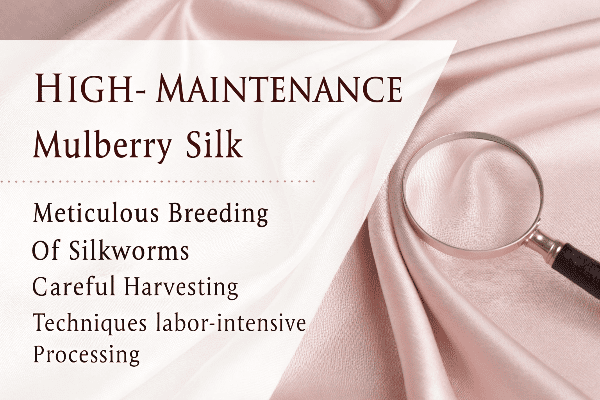
Mulberry silk is delicate and requires hand washing or dry cleaning. It can’t handle rough use, high temperatures, or harsh detergents. Improper care can quickly damage its softness and sheen.[^2]
Common care challenges
| Issue | Risk with Mulberry Silk |
|---|---|
| Machine washing | Weakens fibers, causes fraying |
| Heat exposure | Causes yellowing or shrinkage |
| Detergents | Strips natural luster |
| Dryers | Not safe—can shrink or scorch |
| Ironing | Requires low temp, delicate care |
Check out The Laundress silk care guide for pro cleaning tips.
Is mulberry silk durable compared to other fabrics?
It depends on how it’s used. As a natural protein fiber, silk has strength—but not resilience.
Mulberry silk is strong in terms of tensile strength but lacks elasticity and abrasion resistance. It can snag, tear, or thin out with frequent wear or rough friction.[^3]
Durability comparison
| Fabric Type | Durability Rating | Notes |
|---|---|---|
| Mulberry Silk | Moderate | Needs gentle care |
| Polyester Satin | High | Strong but less breathable |
| Cotton | High | Absorbs moisture but wears evenly |
| Linen | Medium | Strong but wrinkles easily |
For bedding and loungewear, silk offers unmatched softness but not hard-wearing durability.
Does mulberry silk wrinkle or snag easily?
Yes—and it’s one of its biggest drawbacks for everyday use.
Mulberry silk wrinkles easily and can snag on rings, zippers, rough skin, or even fingernails. Travel and storage require extra care to avoid creases and damage.
Handling concerns
- Storage: Needs folding with tissue or hanging with padded hangers
- Wearing: Avoid sharp accessories or rough surfaces
- Travel: Prone to wrinkling in suitcases without protection
Slip's care guide suggests storing silk in breathable cotton bags—not plastic.
Why is mulberry silk so expensive?
Luxury has a price—and silk is no exception.
Mulberry silk is labor-intensive to produce. It comes from silkworms fed exclusively on mulberry leaves, and the harvesting process is slow and delicate. That raises both material and production costs.[^4]
Price comparison
| Fabric | Typical Cost (per yard) |
|---|---|
| Mulberry Silk (22MM) | $30–$60 |
| Polyester Satin | $2–$8 |
| Cotton | $5–$15 |
Brands like LilySilk use only Grade 6A mulberry silk—which comes at a premium for quality assurance.
Is mulberry silk sensitive to the environment?
It’s a natural fiber—which means it's more reactive than synthetics.
Mulberry silk can fade in direct sunlight, absorb odors, and degrade with prolonged exposure to sweat, oils, or moisture. It's not ideal for high-humidity climates or activewear.
Environmental vulnerabilities
| Element | Effect on Silk |
|---|---|
| Sunlight | Fading and yellowing over time |
| Sweat | Can weaken fibers and stain |
| Humidity | Promotes mildew if stored wet |
| Skin oils | Leaves visible discoloration |
Mulberry silk should be worn in cool, dry settings and stored in breathable conditions—like a cotton pouch in a dark drawer.
Conclusion
Mulberry silk is soft, breathable, and luxurious—but it comes with real disadvantages: high cost, delicate care, wrinkling, and low abrasion resistance. It’s best for occasional wear, special pieces, or customers who value luxury over convenience.
[^1]: Healthline – Is Mulberry Silk Worth It?
[^2]: The Laundress – How to Wash Silk
[^3]: Good Housekeeping – Durability Guide: Natural vs Synthetic Fabrics
[^4]: LilySilk – What Makes Mulberry Silk Expensive?