


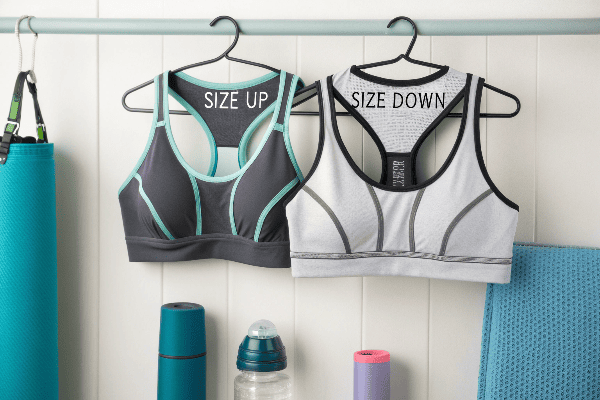
You find a sports bra you love—but it’s tight around the band and slightly loose in the cups. Do you size up or down? One wrong move and you're stuck with a bra that rubs, rides up, or doesn’t support.
Whether you size up or down in a sports bra depends on where the fit issue lies: size down if the band is too loose, and size up if the cups are too small or the straps dig in. Always prioritize comfort and support over label size.
I once tried to size down hoping for more support—but the band was so tight it left red marks by the end of the day. Lesson learned: sizing isn’t just about numbers. It’s about how your body feels during movement.
Table of Contents
- When should you size down in a sports bra?
- When should you size up in a sports bra?
- What is sister sizing and how can it help?
- What’s the best way to find your true fit?
- Conclusion
When should you size down in a sports bra?
It depends on the support level and fit zone.
Size down if the band rides up, the straps slip off your shoulders, or the bra shifts during exercise. A tighter band provides more support[^1].
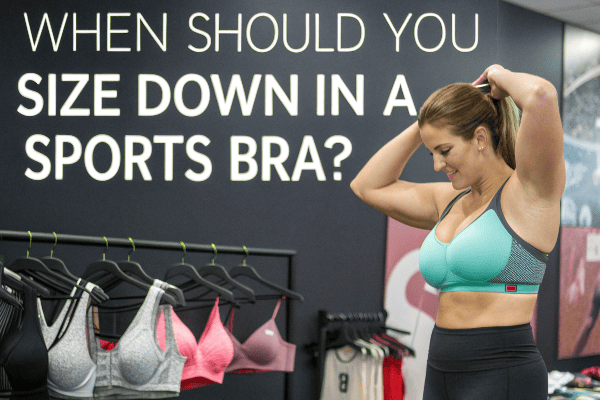
Signs you need a smaller size
| Symptom | What It Likely Means |
|---|---|
| Bra shifts when moving | Band is too loose |
| Straps fall off shoulders | Band and strap combo is too loose |
| Not enough support in motion | Compression isn’t firm enough |
According to REI’s expert bra fit guide, a firm band is the key anchor of support in most sports bras.
When should you size up in a sports bra?
Compression should not mean restriction.
Size up if the band feels constricting, cups dig into your breast tissue, or you feel restricted when breathing deeply[^2].
Warning signs of a too-small bra
- Red marks that don’t fade quickly
- Cup overflow or spillage at the top or sides
- Painful digging at the underbust or shoulders
- Shortness of breath during exercise
Cleveland Clinic warns that too-tight bras may restrict breathing or irritate skin when worn long-term.
What is sister sizing and how can it help?
Sometimes the answer isn’t just “up” or “down.”
Sister sizing adjusts the band and cup proportionally: go down in band size and up in cup size—or vice versa—to find a better fit without changing the support level[^3].
Understanding sister sizes
| Original Size | Sister Size Down | Sister Size Up |
|---|---|---|
| 34C | 32D | 36B |
| 36B | 34C | 38A |
For example, if your 34C bra feels too loose in the band but fits well in the cup, try a 32D instead.
ThirdLove provides a helpful breakdown of how sister sizing works and when to use it.
What’s the best way to find your true fit?
Measure and test movement, not just the tag.
Measure your underbust and bust accurately, then try on multiple sizes. The best fit keeps you supported through full movement—without pain or slippage.
Try the movement test
- Jump in place: does the bra stay put?
- Raise your arms: does the band lift up?
- Take deep breaths: can your chest expand comfortably?
- Twist your torso: does anything dig in or shift?
The American Academy of Orthopaedic Surgeons (AAOS) emphasizes functional testing—how a bra performs during activity is more important than the label.
Conclusion
Sizing up or down depends on your fit issues. If it shifts, size down. If it restricts, size up. The right sports bra balances comfort with support—no compromise. Always listen to your body before listening to the number on the tag.
[^1]: REI. “How to Choose and Fit a Sports Bra.” Link
[^2]: Cleveland Clinic. “Tight Bras: Are They Harmful?” Link
[^3]: ThirdLove. “What Is Sister Sizing?” Link
[^4]: AAOS. “Choosing the Right Sports Bra.” Link