
Some sweaters cost $30, others go for $3,000—and the difference often comes down to what they’re made of. If you've ever wondered what drives those luxury price tags, it starts with the fiber.
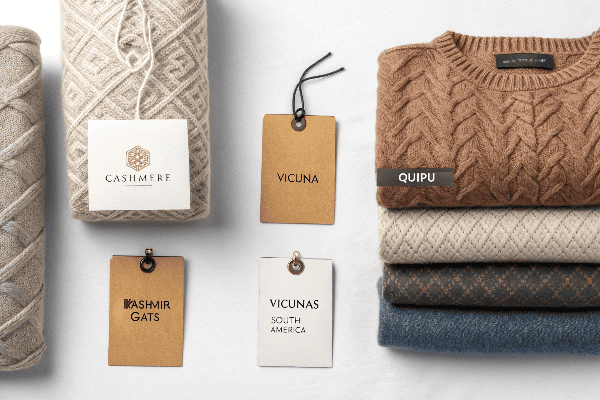
The most expensive sweater materials include vicuña, qiviut, cashmere (especially Grade A or double-ply), and baby alpaca. These fibers are rare, labor-intensive to harvest, and prized for their softness and warmth.
I once worked with a client who ordered a sample made from 100% vicuña. It cost more than the rest of their entire knitwear collection combined—and had to be handled like silk.
Table of Contents
- Why is vicuña the most expensive sweater material?
- What is qiviut and why is it also expensive?
- Is all cashmere expensive?
- How does baby alpaca compare in price?
- Conclusion
Why is vicuña the most expensive sweater material?
It’s rare, incredibly soft, and protected by law.
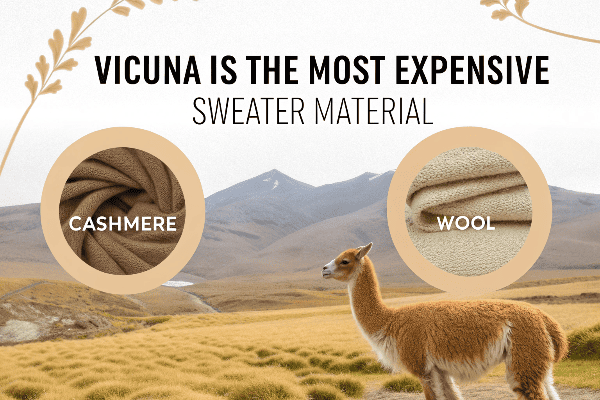
Vicuña wool—often called "the fiber of the gods"—comes from a wild Andean animal closely related to the alpaca. It’s hand-harvested every 2–3 years under strict regulations and has a market price of up to $500–$600 per yard.
Why vicuña costs so much
| Factor | Explanation |
|---|---|
| Limited supply | Animals can only be sheared every few years |
| Fiber fineness | ~12 microns (finer than cashmere) |
| Legal protections | Protected species—high harvesting standards |
| Manual processing | Cannot be dyed chemically or machine-treated |
Loro Piana’s vicuña collection highlights just how exclusive and labor-intensive this material is.
A vicuña sweater can easily cost $2,000–$5,000 depending on brand and construction.
What is qiviut and why is it also expensive?
It's softness from the Arctic—literally.
Qiviut is the downy undercoat of the musk ox, found in Alaska and Canada. It’s extremely warm (8x warmer than wool), doesn’t shrink, and is incredibly soft. But the harvest is minimal.
Qiviut’s luxury profile
| Attribute | Detail |
|---|---|
| Micron size | Around 12–14 microns |
| Availability | Limited—only ~6,000 lbs yearly |
| Price per kilo | $400–$600+ |
| Use case | Rare scarves and hand-knit sweaters |
Qiviut yarn is typically hand-knitted by indigenous cooperatives such as Oomingmak Musk Ox Producers’ Co-op, adding to its exclusivity and cultural value.
Is all cashmere expensive?
Not all—but high-grade cashmere definitely is.
Grade A cashmere (under 15 microns, longer staple length) is ultra-soft, more durable, and more expensive. Double-ply or pure Inner Mongolian cashmere is particularly costly.
Factors that affect cashmere price
| Factor | Price Impact |
|---|---|
| Fiber diameter | Finer = softer = more expensive |
| Fiber length | Longer = less pilling, more durable |
| Region of origin | Inner Mongolia cashmere is premium |
| Ply count | 2-ply is thicker and more luxurious |
Brands like Brunello Cucinelli and Loro Piana source top-tier cashmere and command premium prices for it.
For entry-level shoppers, cashmere blends or recycled options may offer similar feel at a lower price.
How does baby alpaca compare in price?
It’s more affordable than vicuña or qiviut—but still a luxury fiber.
Baby alpaca doesn’t come from baby animals—it refers to the first shearing, which produces the softest fleece. It’s warmer than wool, less itchy, and hypoallergenic.
Alpaca vs other premium fibers
| Material | Avg. Price (sweater) | Softness | Warmth |
|---|---|---|---|
| Baby Alpaca | $150–$400 | ★★★★☆ | ★★★★☆ |
| Cashmere | $200–$600+ | ★★★★★ | ★★★☆☆ |
| Qiviut | $500–$2,000+ | ★★★★★ | ★★★★★ |
| Vicuña | $2,000–$5,000+ | ★★★★★ | ★★★★☆ |
Peru Alpaca notes that baby alpaca is softer and more eco-friendly than conventional wool.
Baby alpaca is a great middle ground for brands seeking softness with a premium feel—without breaking the bank.
Conclusion
Vicuña and qiviut are the most expensive sweater materials in the world, prized for their rarity and luxurious feel. For everyday luxury, Grade A cashmere and baby alpaca offer softness, warmth, and prestige at more accessible prices.
- Vicuña is protected by the Peruvian government and CITES. Harvesting is limited to supervised Chaccu ceremonies.
- Qiviut comes from musk oxen that naturally shed their undercoat once a year—typically collected by hand-combing.
- Cashmere grading is based on fiber diameter, length, color, and region. Grade A is the finest (under 15 microns).
- According to The Woolmark Company, fiber diameter strongly influences garment softness and retail price.
- Baby alpaca refers to the fleece from the first shearing, not the age of the animal—usually finer and less itchy than adult fleece.