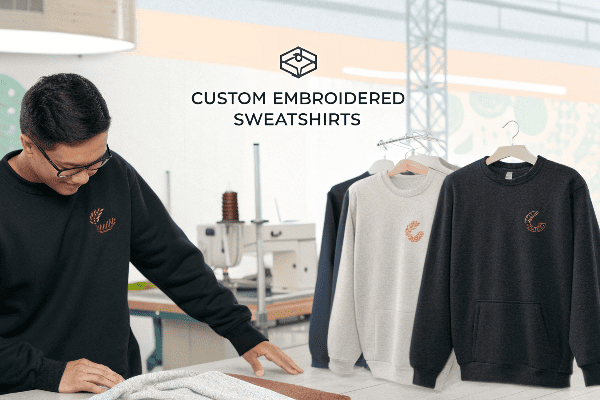
Ordering custom embroidered sweatshirts might seem simple, but there’s a lot to consider beyond just the design. From fabric selection to embroidery technique, each choice impacts the final look and feel. Before placing an order, knowing what factors to prioritize can save you time, money, and disappointment.
Choosing the right fabric, embroidery method, and design complexity ensures you get the best value for your custom sweatshirt order. The right decisions lead to high-quality products that match your brand’s needs.
As a clothing manufacturer, I’ve seen many clients struggle with these choices, but with a little guidance, they’ve ended up with great results.
Table of Contents
- What type of fabric is best for embroidered sweatshirts?
- How do embroidery design complexity and size affect the cost?
- What embroidery technique should you choose for your sweatshirt?
- What are the typical lead times for custom embroidered sweatshirts?
- Conclusion
What type of fabric is best for embroidered sweatshirts?
Fabric selection is essential to the success of your custom embroidered sweatshirt.
Cotton and cotton-blend fabrics are the best choices for embroidery. They provide a smooth surface for the stitching and ensure the design remains clear and vibrant.

Fabric selection for embroidery
| Fabric Type | Ideal For Embroidery? | Benefits |
|---|---|---|
| 100% Cotton | Yes | Soft, breathable, and durable |
| Cotton-Poly Blend | Yes | Retains shape, less shrinkage |
| Polyester | No | Can be difficult for intricate designs |
Cotton or cotton blends are typically preferred for custom sweatshirts as they offer durability and a smooth, even surface for embroidery.
Want to learn more about fabric selection? Check out this article by Cotton Incorporated【^1】.
How do embroidery design complexity and size affect the cost?
The complexity of your design impacts both cost and production time.
Simple designs are cheaper, while intricate logos with many details or thread colors can increase the price. The size of the design also matters—larger designs often cost more.
The cost implications of complex designs
| Design Complexity | Cost Impact | Example |
|---|---|---|
| Simple (1-2 colors) | Low | Small logo on chest |
| Medium (3-4 colors) | Medium | Larger logo on back |
| Complex (5+ colors) | High | Detailed, multi-color artwork |
While it’s tempting to go all-out with a detailed design, simplicity can often be just as effective and much more affordable.
For more tips on design pricing, refer to Embroidery.com’s pricing guide【^2】.
What embroidery technique should you choose for your sweatshirt?
The embroidery technique affects both the look and feel of your sweatshirt.
Flat embroidery is the most common technique for sweatshirts, providing a neat, durable finish. Other techniques, like puff embroidery, add texture but can raise costs.
Exploring different embroidery techniques
| Technique | Look & Feel | Best For |
|---|---|---|
| Flat Embroidery | Clean, flat | Simple logos, text |
| Puff Embroidery | Raised texture | Bold designs, logos with depth |
| 3D Embroidery | Highly textured | High-visibility logos |
Flat embroidery works well for most designs, but if you want a standout effect, consider puff or 3D embroidery for added impact.
Learn more about embroidery techniques in this guide by The Embroidery Mentor【^3】.
What are the typical lead times for custom embroidered sweatshirts?
Understanding the production timeline is crucial to meet your deadlines.
Custom embroidered sweatshirts typically take 7-30 days to produce, depending on order volume and design complexity. Always ask your supplier for an estimated timeline.
Managing expectations with lead times
Production times vary based on design complexity and order quantity. Sample approval can add an extra week, so be sure to build that into your timeline.
For detailed production timelines, check this article from Custom Ink【^4】.
Conclusion
By carefully selecting your fabric, design, and embroidery method, you can create custom embroidered sweatshirts that meet your expectations. Don’t rush the process—taking the time to make the right choices ensures a product that is both high-quality and cost-effective.
[^1]: Cotton Incorporated – Fabric Selection Guide
[^2]: Embroidery.com – Pricing Guide
[^3]: The Embroidery Mentor – Embroidery Techniques
[^4]: Custom Ink – Production Timelines