
You’ve probably heard “designer,” “tailor[^1],” or even “seamstress”—but what’s the real word for someone who makes clothes? Especially in the industry? It’s not always clear.
The most accurate term is “garment manufacturer[^2]” for companies, and “clothing maker,” “tailor[^1],” or “sewer[^3]” for individuals—depending on their role and the scale of production.
When I started my apparel factory, I struggled to explain my role to international clients. Was I a producer? A designer? The answer depends on who’s asking—and what they need.
Table of Contents
- Is there a difference between a [tailor](https://textileapex.com/difference-between-tailoring-and-garments-industries/)[^1] and a [garment manufacturer](https://zegaapparel.com/blog/what-is-a-clothing-manufacturer-types-roles/)[^2]?
- What do you call someone who works in a clothing factory?
- What is an [apparel manufacturer](https://tegmade.com/resources/clothing-manufacturers-how-they-help-fashion-designers-bring-their-visions-to-life/)[^5] vs. a [fashion designer](https://www.bls.gov/ooh/arts-and-design/fashion-designers.htm)[^6]?
- What if a person both designs and produces clothes?
- Conclusion
Is there a difference between a tailor[^1] and a garment manufacturer[^2]?
It sounds similar, but they serve different markets.
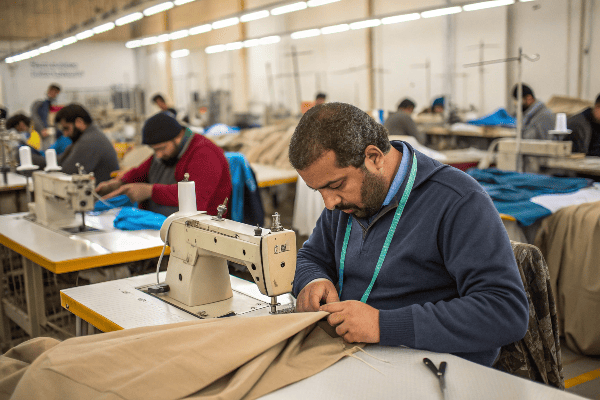
A tailor[^1] makes custom-fitted garments, often by hand. A garment manufacturer[^2] produces clothes in bulk for brands or retailers.
Key Differences
| Role | Tailor | Garment Manufacturer |
|---|---|---|
| Scale | One-off / Small batch | Mass production |
| Customization | High – made-to-measure | Medium – based on tech packs |
| Equipment | Basic sewing machines | Industrial production lines |
| Clients | Individuals | Brands / Retailers / Distributors |
Real-Life Example
When Ken, one of my U.S. clients, first asked if we were “tailor[^1]s,” I knew there was confusion. He needed 2,000 printed hoodies—not a hand-sewn tuxedo. That’s the gap between tailor[^1]ing and manufacturing.
What do you call someone who works in a clothing factory?
Not every worker is the same.
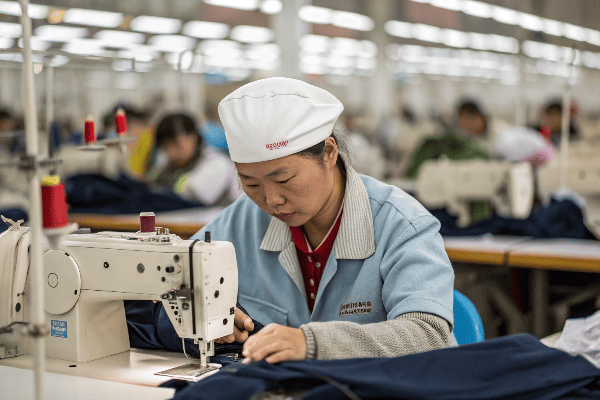
People in a clothing factory have specific roles—sewer[^3]s, cutters, pattern maker[^4]s, quality inspectors, and production managers.
Factory Job Titles
| Job Title | What They Do |
|---|---|
| Sewer | Assembles garments using sewing machines |
| Cutter | Cuts fabric based on patterns |
| Pattern Maker | Designs the blueprint for clothing construction |
| QC Inspector | Checks for defects, ensures standards |
| Production Manager | Oversees the whole manufacturing process |
In my factory, we also have sample makers who build the first prototype, and merchandisers who follow up with clients. Everyone has a role—it’s a team effort.
What is an apparel manufacturer[^5] vs. a fashion designer[^6]?
Many people confuse these two, especially in the startup phase.
A fashion designer[^6] creates the concept and style; an apparel manufacturer[^5] turns those ideas into real garments.
Creative vs. Practical
| Role | Fashion Designer | Apparel Manufacturer |
|---|---|---|
| Focus | Aesthetics, style, mood boards | Fabrics, sizing, production schedules |
| Responsibility | Design sketches, trend analysis | Sampling, bulk production, quality control |
| End User | Fashion buyers, brand managers | Brands, retailers, wholesalers |
I’ve worked with many designers who send us beautiful ideas. But unless there’s a tech pack and production plan, those designs stay on paper.
What if a person both designs and produces clothes?
That’s more common now, especially with small fashion brands.
Such a person is often called an independent designer[^7], fashion entrepreneur, or private label brand owner.
In our business, we call them ODM clients[^8]—they bring ideas, and we help make them real. Sometimes they also sell directly online through Shopify or Amazon.
Conclusion
The word you choose depends on the role and scale. “Garment manufacturer” is perfect for factories like mine, while individuals might be called tailor[^1]s, designers, or sewer[^3]s—depending on their skills and purpose.
[^1]: Exploring the differences between a tailor and a garment manufacturer
[^2]: Understanding the role of a garment manufacturer
[^3]: Learning about the role of a sewer
[^4]: Discovering the role of a pattern maker
[^5]: Exploring the collaboration between apparel manufacturers and fashion designers
[^6]: Understanding the creative process of a fashion designer
[^7]: Learning about independent designers
[^8]: Understanding ODM clients