
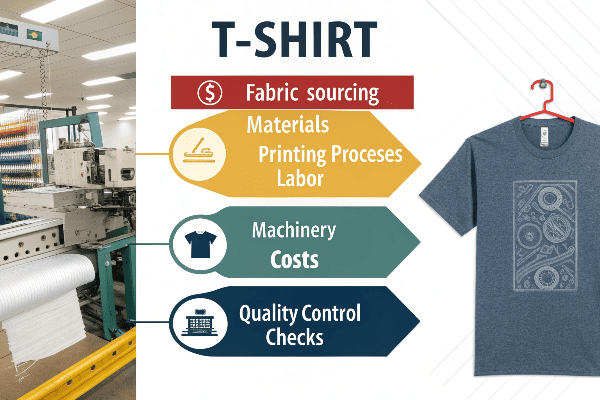
If you’re planning to launch a clothing brand or work with a manufacturer, you might be surprised where most of the cost goes in making a simple T-shirt.
The most expensive part of making a T-shirt is usually the fabric itself—especially when using high-quality cotton, specialty knits, or sustainable materials.
I’ve quoted hundreds of T-shirt production runs for clients. While many people assume printing or labor costs dominate, fabric almost always takes the biggest portion of the budget.
Table of Contents
- Why is fabric the biggest cost in T-shirt production?
- What about sewing and labor costs?
- What other factors add to the cost?
- Conclusion
Why is fabric the biggest cost in T-shirt production?
Because it’s the core material that defines feel, weight, and quality.
Fabric typically accounts for 40–60% of the total manufacturing cost. Premium cotton, bamboo, modal, or organic blends can significantly drive up costs.
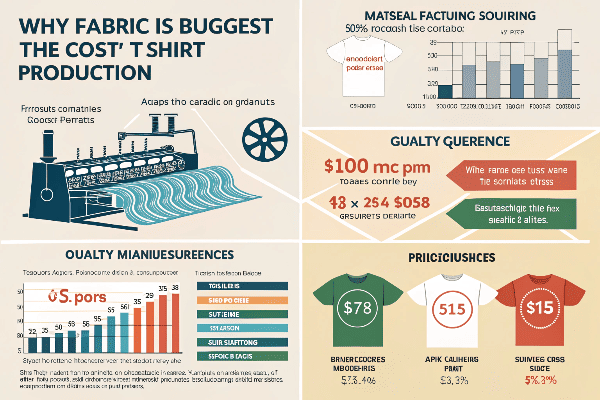
Fabric cost breakdown
| Fabric Type | Average Cost per Meter | Impact on Price |
|---|---|---|
| 100% Cotton (Standard) | $1.50–$2.50 | Low–Moderate |
| Combed/Ring-Spun Cotton | $2.50–$4.00 | Higher Quality |
| Organic Cotton | $3.50–$5.00 | Eco-premium |
| Bamboo / Modal | $4.00–$6.00 | Luxury feel |
| Performance Blends | $4.00–$7.00+ | Sportswear grade |
Fabric decisions affect everything—comfort, shrinkage, breathability, and brand perception.
What about sewing and labor costs?
Labor plays a role but is usually lower than fabric—depending on country.
In places like China, Bangladesh, or Vietnam, labor cost per T-shirt can be as low as $0.20 to $0.60. In the U.S. or Europe, that cost jumps to $2–$6 per piece.
Cost by region
| Country | Average Sewing Cost per Tee |
|---|---|
| Bangladesh | $0.20–$0.40 |
| China | $0.30–$0.60 |
| Vietnam | $0.35–$0.70 |
| USA / EU | $2.00–$6.00 |
Keep in mind that complex construction or thicker fabrics increase sewing time—and cost.
What other factors add to the cost?
Printing, trims, labeling, packaging, and logistics all stack up.
After fabric and sewing, the next biggest cost driver is usually printing—especially with full-color DTG, screen printing with multiple layers, or embroidery.
Secondary cost contributors
| Element | Cost Range (per tee) | Notes |
|---|---|---|
| Screen printing | $0.50–$2.00+ | Cost rises with colors and size |
| DTG / DTF print | $1.00–$3.00 | Better for small runs |
| Embroidery | $1.50–$4.00 | High perceived value |
| Neck labels | $0.20–$0.50 | Woven or heat transfer |
| Packaging | $0.10–$0.80 | Polybag, hangtag, barcode |
| Logistics | Varies | Depends on shipping route |
These small costs add up quickly, especially for premium or branded apparel.
Conclusion
The most expensive part of making a T-shirt is the fabric, followed by printing and embellishments, then labor. If you're building a fashion brand, it pays to invest in quality fabric—and to understand how every detail affects your final price and profit margins.
[^1]: Cotton Fabric Types – Textile School
[^2]: How to Choose Fabrics for Your Clothing Line – Fashion Development
[^3]: Understanding T-shirt Production Costs – Textile World