
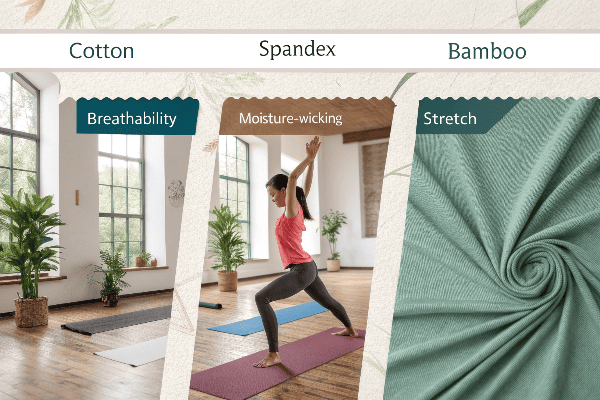
Not all yoga clothes are created equal. If your leggings slip during poses or your top sticks uncomfortably to your skin, the fabric might be the problem. Choosing the right fabric can completely change how your yoga session feels.
The best fabric for yoga is a blend of nylon or polyester with spandex. These materials offer stretch, moisture-wicking properties, breathability, and support—everything you need for a comfortable practice.
I’ve worked with brands building yoga collections from scratch, and the first thing we always do is test fabrics for stretch, recovery, and sweat performance. Here’s what you should know.
Table of Contents
- What makes a fabric ideal for yoga?
- Which fabrics are most commonly used?
- What about sustainable yoga fabrics?
- What’s the best choice for each yoga style?
- Conclusion
What makes a fabric ideal for yoga?
Yoga clothing needs to stretch, breathe, and stay put through movement.
The ideal yoga fabric has four-way stretch, moisture-wicking capability, and a soft feel on the skin. It should also recover well, meaning it doesn’t sag after multiple wears.
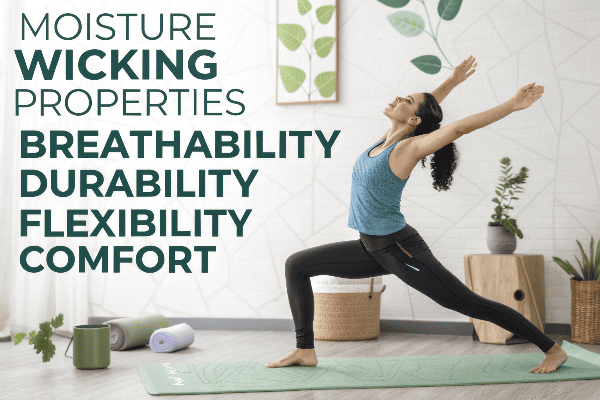
Performance fabric features
| Feature | Why It Matters for Yoga |
|---|---|
| Stretch (4-way) | Allows unrestricted movement |
| Moisture-wicking | Keeps skin dry during sweaty sessions |
| Breathability | Regulates body temperature |
| Soft Texture | Prevents skin irritation during poses |
| Durability | Withstands multiple washes and stretches |
You can find these properties in fabrics used by top yoga brands like Lululemon and Alo Yoga^[1].
Which fabrics are most commonly used?
Most top yoga brands use blends of nylon-spandex or polyester-spandex for leggings, bras, and tops.
Nylon blends feel softer and more luxurious, while polyester blends are more durable and better at moisture management. Both work well depending on your priorities.
Nylon vs Polyester for Yoga
| Fabric | Pros | Cons |
|---|---|---|
| Nylon-Spandex | Super soft, stretchy, body-hugging fit | Slightly more expensive |
| Polyester-Spandex | Durable, moisture-wicking, colorfast | Slightly rougher hand-feel |
| Cotton-Spandex | Breathable, natural feel | Poor sweat control, stretches out |
Avoid 100% cotton—it absorbs moisture and loses shape quickly^[2].
What about sustainable yoga fabrics?
Eco-conscious yoga brands are using recycled polyester (rPET), bamboo viscose, and TENCEL™.
These fabrics offer comfort and sustainability, though performance varies. Recycled polyester blends perform similarly to virgin polyester. Bamboo is soft but less elastic.
Sustainable yoga fabric options
| Fabric | Sustainability Score | Performance Rating |
|---|---|---|
| Recycled Polyester | High (from plastic waste) | High |
| Bamboo Viscose | Renewable resource | Moderate |
| TENCEL™ Lyocell | Low-impact production | Moderate |
Look for certifications like GRS (Global Recycled Standard) or OEKO-TEX® to ensure eco-friendly and skin-safe material choices^[3].
What’s the best choice for each yoga style?
Yoga fabric needs may vary by intensity.
For hot yoga or power yoga, prioritize sweat-wicking polyester blends. For gentle or restorative yoga, a soft nylon-spandex or bamboo blend works beautifully.
Fabric recommendations by yoga style
| Yoga Type | Best Fabric Choice |
|---|---|
| Hot Yoga | Polyester-Spandex |
| Vinyasa / Flow | Nylon-Spandex |
| Restorative / Yin | Bamboo or Cotton-Spandex blends |
| Outdoor Yoga | UV-protective synthetic blends |
YogaOutlet and Beyond Yoga offer a wide range of fabric choices based on yoga type.
Conclusion
The best fabric for yoga is a nylon or polyester blend with spandex, offering stretch, moisture-wicking, and comfort. Sustainable options like bamboo and recycled polyester are great if performance and eco-friendliness both matter to you.
- Lululemon Official Website – https://shop.lululemon.com/
- Healthline: Why Cotton Isn't Great for Sweaty Workouts – https://www.healthline.com/health/cotton-vs-polyester
- OEKO-TEX® Certification Info – https://www.oeko-tex.com/en/our-standards/standard-100-by-oeko-tex