
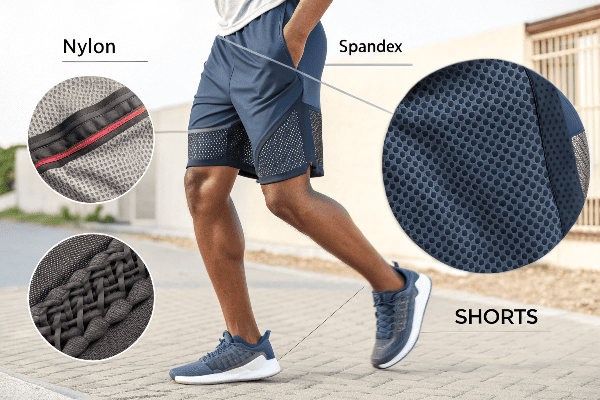
Mesh shorts are a staple for workouts, sports, and summer wear. They’re lightweight, breathable, and fast-drying—but what exactly are they made from?
Mesh shorts are typically made from synthetic fibers like polyester or nylon, often with added spandex for stretch. The open-weave “mesh” structure allows for airflow, making them ideal for athletic and activewear.
When I work with clients on custom sportswear designs, mesh fabric is always one of the first choices for comfort and breathability.
Table of Contents
- Why is polyester commonly used in mesh shorts?
- Are there other materials used in mesh shorts?
- What’s the structure of mesh fabric?
- Are mesh shorts good for workouts?
- Conclusion
Why is polyester commonly used in mesh shorts?
Polyester is the go-to material in athletic meshwear.
It’s strong, lightweight, and doesn’t absorb much moisture. This makes polyester mesh ideal for sweaty workouts and quick-drying conditions.
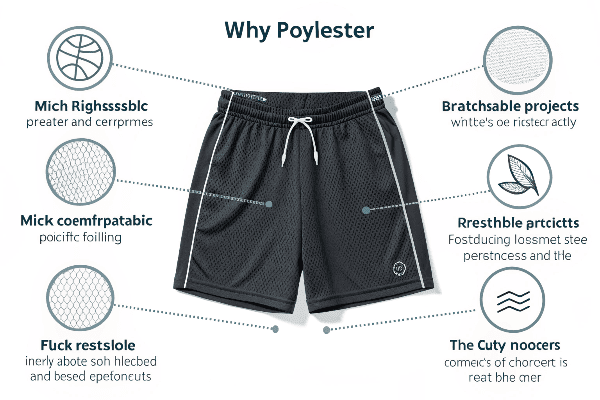
Polyester mesh properties
| Feature | Benefit |
|---|---|
| Moisture-wicking | Keeps you dry during intense activity |
| Breathable structure | Prevents heat buildup |
| Lightweight feel | Great for mobility |
| Durable | Withstands repeated washing |
Many performance sportswear brands^[1] use polyester mesh for this reason. Blends with spandex add stretch and comfort.
Are there other materials used in mesh shorts?
Yes, besides polyester, other synthetic materials may be used.
Nylon is sometimes used for a softer, smoother feel, while cotton blends offer a more casual look, though they retain more moisture.
Alternative materials
| Material | Use Case |
|---|---|
| Nylon | Soft-touch, high-performance gear |
| Spandex | Used in blends for stretch |
| Cotton blends | Lounging or fashion mesh styles |
Cotton mesh^[2] isn’t common in performance shorts due to slow drying time but may suit loungewear styles.
What’s the structure of mesh fabric?
Mesh is defined by its open-hole knit construction.
Instead of being tightly woven, mesh fabric has small gaps or holes throughout, which allow air to pass through and improve ventilation.
Types of mesh used in shorts
| Mesh Type | Characteristics |
|---|---|
| Tricot mesh | Smooth, flat-knit, less stretchy |
| Pinhole mesh | Tiny, evenly spaced holes |
| Bird’s eye mesh | Larger holes for max airflow |
| Air mesh | Thicker, layered mesh with dimension |
Bird’s eye mesh^[3] is a top choice for athletes needing cooling performance.
Are mesh shorts good for workouts?
Absolutely—they’re designed for it.
Mesh shorts are favored for sports like basketball, running, and training because they’re breathable, quick-drying, and don’t cling to sweat.
Key benefits for athletes
- Temperature regulation – Helps body cool down
- Comfort – Lightweight and non-restrictive
- Performance – Reduces chafing and heat buildup
- Style versatility – From gyms to streetwear
Make sure they have a built-in lining^[4] if you’re wearing them casually or outside the gym.
Conclusion
Mesh shorts are primarily made from polyester or nylon due to their moisture-wicking, lightweight, and breathable properties. Their distinctive open-knit design makes them ideal for sports, workouts, and warm climates. When shopping or producing mesh shorts, fabric structure and blend ratios matter just as much as the style.
- Nike – Men's Mesh Shorts: https://www.nike.com/w/mens-mesh-shorts-3n82y6ymx6znik1
- Textile Learner – Cotton Mesh Fabric: https://www.textilelearner.net/2021/11/cotton-mesh-fabric-types-properties.html
- Wazoodle Fabrics – Birdseye Mesh: https://www.wazoodle.com/fabrics/mesh/birdseye.html
- OutdoorGearLab – Running Shorts Liners: https://www.outdoorgearlab.com/topics/clothing-mens/best-running-shorts/buying-advice#liners