
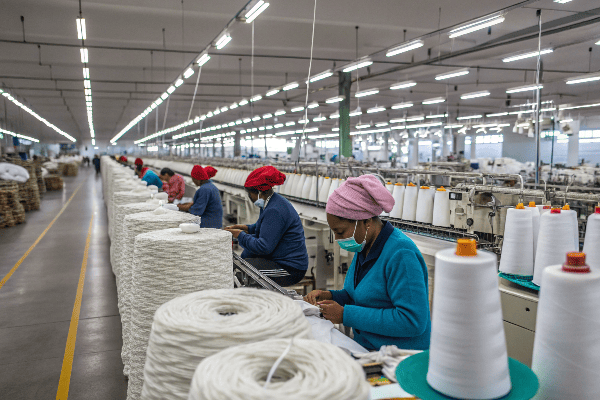
Knitwear is everywhere—from fashion brands to functional sportswear. But most people don’t realize where the majority of these garments are actually made. If you're sourcing knitwear for your brand, it’s essential to know which countries dominate the market.
Most knitwear is manufactured in China, followed by Bangladesh, Vietnam, Turkey, and India. Each country offers different advantages in cost, capacity, quality, and turnaround time.
When I started sourcing knitwear, I thought quality meant high cost. But after working with several manufacturers across different countries, I found that the real value lies in knowing where each country fits in your brand strategy.
Table of Contents
- Why is China the leading knitwear producer?
- What other countries are major knitwear hubs?
- Is Europe still a knitwear powerhouse?
- Are emerging markets producing knitwear too?
- Conclusion
Why is China the leading knitwear producer?
China accounts for nearly one-third of all global knitwear exports[^1].
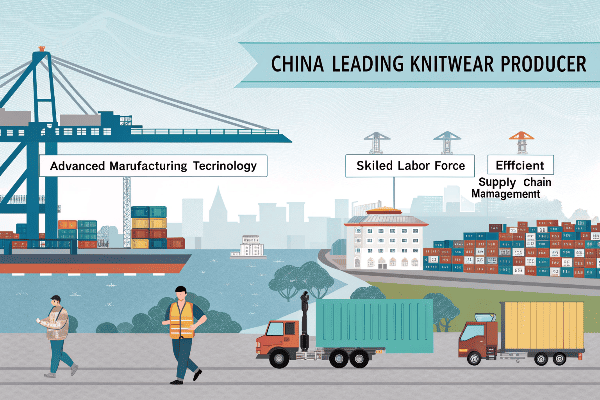
Its dominance is due to its complete supply chain, scale, labor force, and ability to produce everything from fast fashion basics to premium knitwear.
Key advantages of China's knitwear industry
| Advantage | Details |
|---|---|
| Full supply chain | Yarn, knitting, dyeing, sewing, packaging—all local |
| Massive output | Handles both small MOQs and mass production |
| Technology adoption | Uses advanced flat-knit and circular machines |
| Cost and lead time | Competitive pricing and fast delivery |
This is why even premium brands still rely on Chinese factories to scale production[^2].
What other countries are major knitwear hubs?
Several countries have grown significantly in knitwear manufacturing.
Bangladesh, Vietnam, Turkey, India, and Italy are among the top exporters. Each country serves a different market segment, from basic cotton knits to high-end wool garments.
Explore more from World Trade Organization trade stats[^3].
Country-by-country knitwear strengths
| Country | Strengths | Ideal For |
|---|---|---|
| Bangladesh | Lowest labor costs, high capacity | Bulk T-shirts, sweatshirts, fast fashion |
| Vietnam | Reliable quality, FTA access | Mid-tier brands, activewear |
| Turkey | Close to Europe, fast delivery | Boutique fashion, Zara-style production |
| India | Rich in cotton and artisan techniques | Organic, embellished, and boho knits |
| Italy | Expertise in wool and cashmere | High-end fashion houses |
Understanding your product category helps you choose the best sourcing destination.
Is Europe still a knitwear powerhouse?
Yes—for premium and heritage knitwear, Europe still leads.
Countries like Italy, the UK, and Norway are known for luxury knits made from fine merino, cashmere, and wool blends.
Learn how Italian knitwear brands maintain global prestige[^4].
Examples of high-end European knitwear
- John Smedley (UK): Fine-gauge knits “Made in England” for over 200 years
- Dale of Norway (Norway): Woolen sweaters rooted in Nordic tradition
- Italian mills: Supply luxury brands with premium yarns and tailored finishes
For brands focused on craftsmanship and legacy, Europe offers unmatched prestige.
Are emerging markets producing knitwear too?
Yes—countries like Cambodia, Sri Lanka, and Ethiopia are rising.
They offer lower production costs, government incentives, and young labor pools. Brands looking to diversify risk or improve margins are exploring these markets.
New players in the knitwear industry
| Country | Why it matters |
|---|---|
| Cambodia | GSP trade status, lower wages, fast ramp-up |
| Sri Lanka | Ethical manufacturing, skilled workforce |
| Ethiopia | AGOA access to US, low-cost infrastructure |
More on AGOA trade benefits and Africa’s potential in apparel[^5].
These are especially promising for brands seeking long-term growth with competitive pricing.
Conclusion
Most of the world’s knitwear is made in China, but global production is diverse. Bangladesh and Vietnam offer cost advantages, Turkey provides quick-turnaround for Europe, India blends price and craft, while Europe continues to lead in luxury. The best country depends on your brand’s priorities—cost, quality, ethics, or prestige.
[^1]: UN Comtrade. World Export Rankings for Knitwear
[^2]: Business of Fashion. Why Global Brands Still Rely on China
[^3]: WTO. Trade Statistics and Market Profiles
[^4]: Vogue. Italian Cashmere and Knitwear Brands
[^5]: AGOA Info. Overview of the African Growth and Opportunity Act