
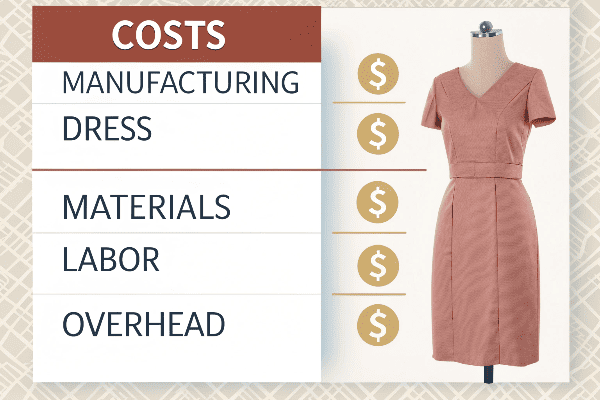
If you're planning to launch a fashion brand or order custom dresses in bulk, one of the first questions you’ll ask is: how much does it cost to manufacture a dress? The truth is—it depends on several key factors.
The cost to manufacture a dress typically ranges from $8 to $50+ per piece for bulk orders, depending on design complexity, fabric quality, labor rates, production location, and order quantity.
When I work with clients on dress production, pricing always comes down to decisions about materials, trims, and labor. Let’s break it down clearly so you can estimate your own costs.
Table of Contents
- What affects the cost of manufacturing a dress?
- Does fabric quality impact the price?
- How does location affect dress manufacturing costs?
- How does order quantity change the price?
- Are there hidden costs in dress production?
- Conclusion
What affects the cost of manufacturing a dress?
Manufacturing a dress isn’t just about stitching fabric—it includes materials, labor, patterns, logistics, and more.
The five major cost factors are: fabric, trims, labor, design complexity, and order quantity. Each one plays a big role in final pricing.
Cost breakdown example for a basic dress
| Cost Element | Estimated Range (USD) |
|---|---|
| Fabric (1.5–2m) | $2.50 – $10.00 |
| Trims & Accessories | $0.50 – $3.00 |
| Labor | $2.00 – $10.00 |
| Pattern & Sampling | $50 – $200 (one-time) |
| Packaging | $0.30 – $1.50 |
| Total (per unit) | ~$8 – $20 (for simple styles in bulk) |
Higher-end styles with complex cuts, linings, or embellishments will push this price much higher.
Does fabric quality impact the price?
Yes—fabric is often the largest cost component.
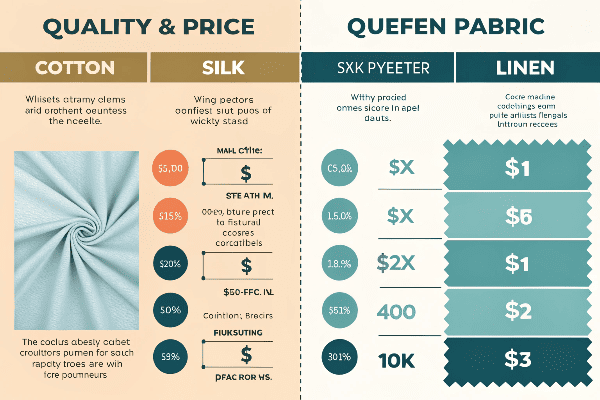
Premium fabrics like silk, Tencel, or organic cotton significantly increase production cost, while standard polyester or rayon keep it low.
Learn more about sustainable and luxury fabrics here[^1].
Fabric comparison
| Fabric Type | Cost Range (per meter) |
|---|---|
| Polyester | $1.20 – $3.00 |
| Cotton (basic) | $2.00 – $4.50 |
| Rayon/Viscose | $2.50 – $6.00 |
| Silk/High-end | $7.00 – $20.00+ |
| Organic fabrics | 15–30% more than regular |
The weight (GSM), weave, and dye process will also affect cost.
How does location affect dress manufacturing costs?
Where you manufacture greatly affects your unit price due to wage differences.
Countries like China, Vietnam, and Bangladesh offer lower labor costs, while production in the U.S. or Europe is more expensive but often faster and with better quality control.
Explore labor cost statistics by country on Statista[^2].
Labor rate comparison (approx.)
| Country | Labor Cost per Dress |
|---|---|
| Bangladesh | $1.50 – $3.00 |
| Vietnam | $2.00 – $4.00 |
| China | $3.00 – $6.00 |
| Turkey | $5.00 – $10.00 |
| USA / Europe | $10.00 – $25.00+ |
Some brands choose higher-cost regions for “Made in [X]” branding or ethical reasons.
How does order quantity change the price?
Bigger orders = lower cost per piece.
Most factories offer price breaks at 100, 300, 500, and 1000+ units. This is because setup costs are spread across more garments.
See how Minimum Order Quantity (MOQ) impacts cost on Maker’s Row[^3].
MOQ pricing example (same dress)
| Order Quantity | Cost per Dress (USD) |
|---|---|
| 50 pcs | ~$18 – $25 |
| 100 pcs | ~$12 – $18 |
| 300 pcs | ~$9 – $14 |
| 500 pcs | ~$8 – $12 |
| 1000+ pcs | ~$6 – $10 |
This is especially important if you're building your own brand or doing white label production.
Are there hidden costs in dress production?
Absolutely. Many first-time buyers overlook non-obvious expenses.
Hidden costs include sample fees, shipping, import duties, quality inspections, and possible remake or repair fees.
| Hidden Cost Type | Typical Range (USD) |
|---|---|
| Sample fee | $50 – $200 per style |
| Shipping (air/sea) | $1 – $3 per piece (bulk sea) |
| Customs duties | 5% – 20% depending on country |
| QC inspection | $100 – $500 per order (optional) |
| Labeling & branding | $0.50 – $2.00 per piece |
Always ask for a full cost sheet from your manufacturer before placing orders.
Conclusion
Manufacturing a dress can cost anywhere from $8 to $50+, depending on the materials, design, order size, and location. To keep your project profitable, always start with a clear tech pack, source the right fabric, and build a long-term relationship with your supplier. Careful planning leads to better margins and higher quality.
[^1]: Common Objective. Sustainable Fibres – The Basics
[^2]: Statista. Textile Manufacturing Labor Costs Worldwide
[^3]: Maker’s Row. Understanding MOQ