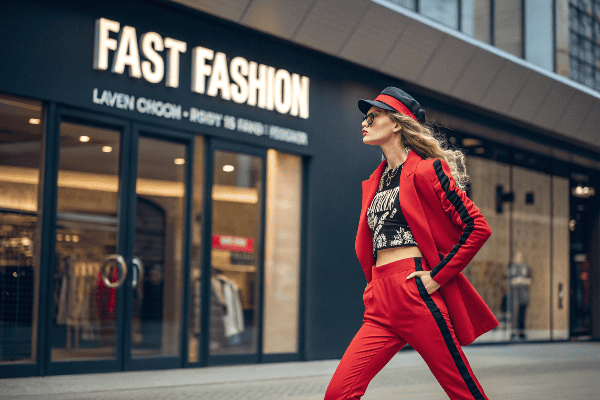
Fast fashion is one of the most profitable—and controversial—segments in the apparel industry. With new drops every week and global operations, a few giants are shaping what millions of people wear daily. But who actually controls this space?
The fast fashion industry is dominated by companies like Zara (Inditex), H&M Group, SHEIN, Uniqlo, and Primark. These brands lead in global reach, trend speed, and manufacturing efficiency[^1].
I’ve worked with suppliers producing for three of these brands. Their secret? Speed, scale, and the ability to adapt quickly—sometimes faster than the trends themselves.
Table of Contents
- Why is Zara considered the leader of fast fashion?
- How does SHEIN dominate online fast fashion?
- What’s H&M’s position in fast fashion?
- What makes Uniqlo different in this space?
- Where does Primark fit into this picture?
- Conclusion
Why is Zara considered the leader of fast fashion?
Zara practically invented modern fast fashion.
Zara dominates by launching thousands of styles a year and getting them from design to store in under three weeks, using a tightly controlled, vertically integrated model[^2].
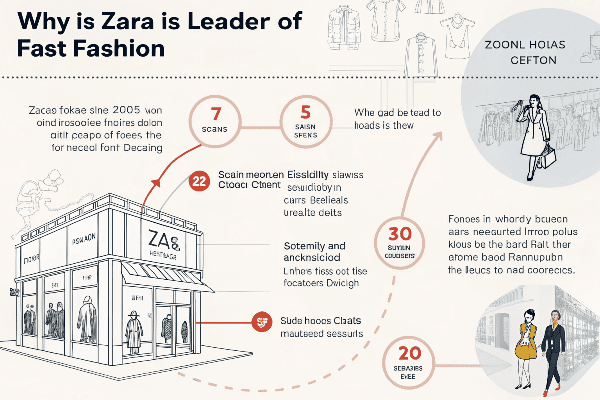
What makes Zara’s model unique?
| Element | Detail |
|---|---|
| Vertical integration | Owns much of its design and production chain |
| Speed-to-store | Launches new designs within 15–20 days |
| Scarcity marketing | Limited stock per style to encourage urgency |
| Global presence | 2,000+ stores in over 90 countries |
Zara’s Spain-based control center closely tracks sales data to inform rapid design cycles.
👉 Zara's parent company Inditex reports
How does SHEIN dominate online fast fashion?
SHEIN is the new heavyweight in ultra-fast e-commerce fashion.
SHEIN dominates by using real-time analytics, on-demand manufacturing, and a social media-driven sales engine—releasing thousands of new products weekly[^3].
Why SHEIN’s system works
| Advantage | Description |
|---|---|
| Data-first design | Uses AI and shopping data to predict trends |
| Agile production | Produces in small batches, ramps up only winners |
| Global shipping | Ships direct to 150+ countries |
| Social commerce | Heavy investment in TikTok, influencer reviews |
SHEIN’s rise shows how Chinese supply chains and digital marketing are reshaping global fashion.
👉 SHEIN business model explained (CBInsights)
What’s H&M’s position in fast fashion?
H&M is one of the most recognized and widely distributed fast fashion brands.
With over 4,000 stores globally, H&M uses volume, affordability, and mainstream trend appeal to remain a dominant force—while investing in sustainability and recycled fibers[^4].
H&M’s approach
| Strength | Detail |
|---|---|
| Global scale | Operates in 70+ countries |
| Sustainability effort | “Conscious” line, recycled polyester, etc. |
| Style range | Trendy basics to seasonal collaborations |
| Entry pricing | Keeps costs accessible for mass audiences |
What makes Uniqlo different in this space?
Uniqlo focuses on timeless basics—not runway trends.
While technically not fast fashion in the traditional sense, Uniqlo dominates by offering high-quality essentials with seasonal innovation, especially in materials like HEATTECH and AIRism[^5].
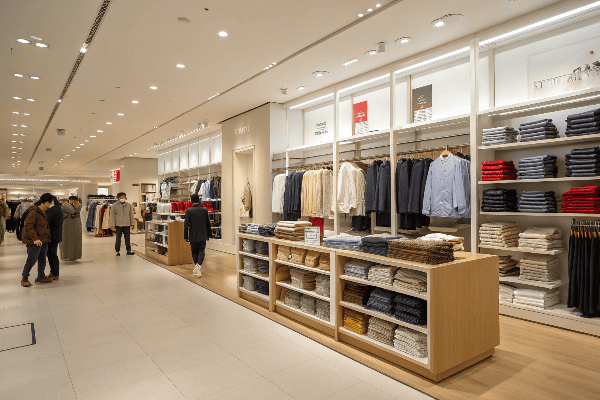
Uniqlo’s minimalist model
| Key Feature | Benefit |
|---|---|
| Tech fabrics | Performance meets style |
| Fewer SKUs | Avoids trend overload, focuses on bestsellers |
| Production efficiency | Mass scale, high consistency |
| Customer loyalty | Strong in Asia, growing in U.S. and Europe |
👉 Uniqlo parent company Fast Retailing
Where does Primark fit into this picture?
Primark thrives with ultra-low prices and no online store.
Based in the UK and Ireland, Primark dominates brick-and-mortar fast fashion by offering extremely low prices, targeting price-sensitive customers in Europe and the U.S.[^6]
Why Primark wins offline
| Feature | Detail |
|---|---|
| Price point | One of the lowest among global brands |
| In-store volume | Huge stores, massive foot traffic |
| Operational focus | No e-commerce = lower costs |
| Expansion strategy | Rapid U.S. and EU growth |
Conclusion
Fast fashion is dominated by Zara, SHEIN, H&M, Uniqlo, and Primark—each with different strategies. Zara leads in vertical speed, SHEIN in online agility, H&M in scale, Uniqlo in essentials, and Primark in budget retail. Together, they define the speed-driven, trend-sensitive world of fast fashion today.
[^1]: FashionUnited – Top Fast Fashion Brands
[^2]: Inditex Annual Report 2024
[^3]: CB Insights on SHEIN
[^4]: H&M Group Sustainability Report
[^5]: Fast Retailing Group (Uniqlo)
[^6]: Primark Company Facts