
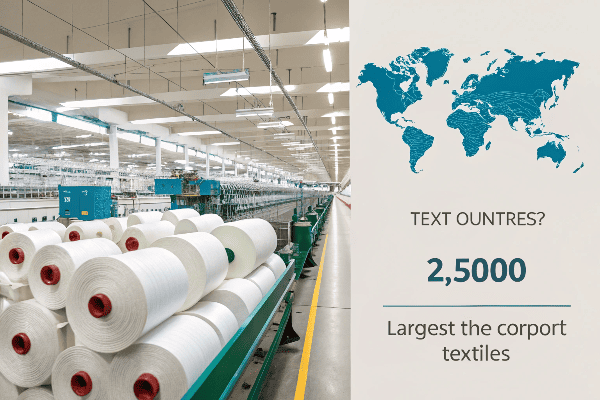
If you're in the clothing or fashion business, knowing where textiles come from matters. Your fabric source affects price, quality, logistics, and sustainability. But among all the producing nations, one country leads the pack.
China is the largest exporter of textiles in the world, accounting for approximately 30–32% of global textile exports, with annual exports exceeding $300 billion[^1].
I’ve worked with factories across Bangladesh, Turkey, and Vietnam—but none offer the vertical scale and speed of China. From yarn spinning to final packaging, China dominates at every level of the textile chain.
Table of Contents
- Why is China the global leader in textile exports?
- Which countries follow after China in textile exports?
- How does China's textile dominance affect clothing brands?
- Conclusion
Why is China the global leader in textile exports?
China has built the most complete and integrated textile ecosystem on earth.
China’s dominance in textile exports comes from its vast infrastructure, high output capacity, cost efficiency, and global shipping access.
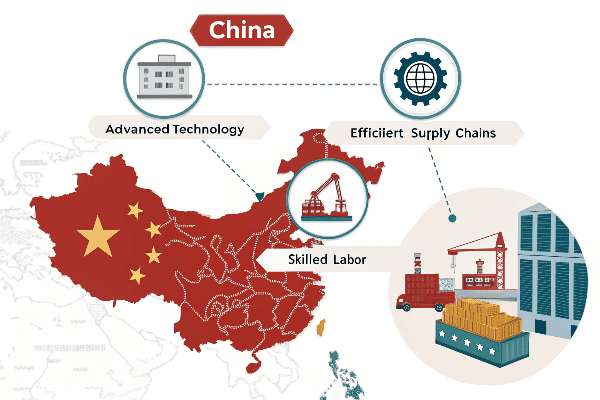
What makes China unbeatable?
| Strength | Description |
|---|---|
| Vertical supply chain | All stages in-house: spinning, weaving, dyeing, cutting |
| Flexible capacity | Supports small orders and mass production alike |
| Competitive pricing | High productivity offsets rising labor costs |
| Global logistics | Proximity to major ports reduces delivery lead times |
From fast fashion to technical textiles, most brands—big or small—still rely on Chinese mills and suppliers[^2].
Which countries follow after China in textile exports?
While China leads, other nations also play critical roles in global fabric supply.
Countries like Bangladesh, Vietnam, India, and Turkey follow China in textile exports, each with their own specialties and cost advantages.
Textile export leaders by country
| Country | Approx. Annual Exports | Key Textile Strengths |
|---|---|---|
| Bangladesh | $57–60 billion[^3] | Knitwear, woven garments, basic fabrics |
| Vietnam | $49 billion[^4] | Apparel-focused, stable mid-tier quality |
| India | $41–44 billion[^5] | Cotton, denim, home textiles |
| Turkey | $36–38 billion[^6] | Proximity to EU, prints, fashion fabrics |
| Germany | $40 billion[^7] | Technical textiles, machinery |
These countries are ideal if you’re looking for region-specific trade advantages or sustainable alternatives.
How does China's textile dominance affect clothing brands?
Working with China offers scale and efficiency—but requires strategy.
China’s leadership gives brands access to speed, customization, and vertical integration—but rising wages and geopolitical concerns may affect long-term dependence.
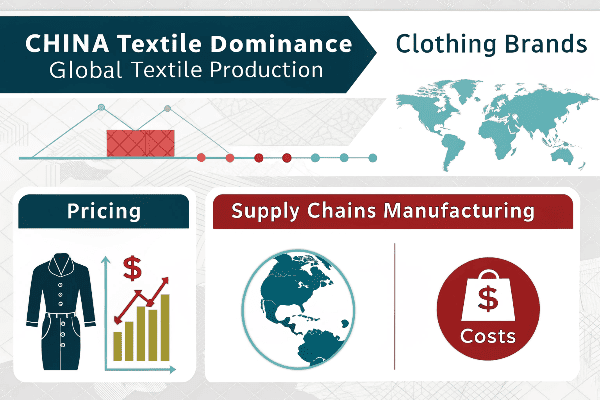
Pros and cons of sourcing from China
| Factor | Benefit | Risk |
|---|---|---|
| Speed | Shorter lead times, quick sample development | Port congestion during peak seasons |
| Cost efficiency | Affordable bulk pricing | Rising labor wages and energy costs |
| Tech advantage | Digital printing, seamless knitting, automation | IP protection and counterfeiting issues |
| Scale | Suits both mass and boutique brands | Potential over-reliance for single-country sourcing |
Smart brands now combine China’s core production with satellite sourcing in Vietnam or Bangladesh for risk management[^8].
Conclusion
China is the world’s largest exporter of textiles, thanks to its integrated supply chain, production speed, and global shipping network. While countries like Bangladesh, Vietnam, and India are growing in importance, China still holds the top position for most fabric and garment buyers. As a brand owner or sourcing manager, it pays to understand each country’s strengths before you build your supply chain.
[^1]: Statista: Leading textile exporting countries 2023
[^2]: ITC Trade Map - China textile exports
[^3]: Bangladesh Garment Manufacturers and Exporters Association (BGMEA)
[^4]: Vietnam Textile & Apparel Association (VITAS)
[^5]: Invest India - Textile Industry
[^6]: Turkish Ministry of Trade – Textile Statistics
[^7]: Germany Trade & Invest – Technical Textiles
[^8]: McKinsey & Co. – Sourcing in the Post-COVID World