
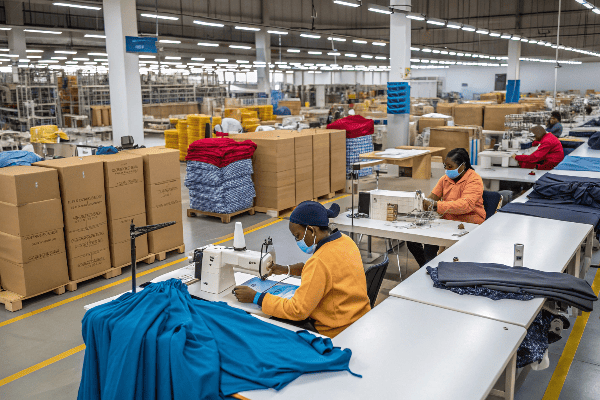
If you're launching a fashion brand or looking to cut production costs, choosing where to manufacture your clothing is one of the most important decisions. Labor, materials, and logistics vary widely across countries—so where is it actually the cheapest to make clothes?
Bangladesh is currently the cheapest country to manufacture clothing, followed by countries like India, Pakistan, and Vietnam, which also offer low labor costs and high-volume apparel production.
I once worked with a startup that moved production from China to Bangladesh. They cut unit costs by 30%—but they also faced longer lead times and stricter quality oversight. That experience taught me: “cheap” and “easy” aren’t always the same thing.
Table of Contents
- Why is Bangladesh the cheapest place to manufacture clothing?
- How do India and Pakistan compare?
- Is Vietnam a cheap option for manufacturing?
- Is China still competitive in 2025?
- Conclusion
Why is Bangladesh the cheapest place to manufacture clothing?
Bangladesh leads the world in ultra-low-cost garment production.
With some of the lowest labor rates in the global apparel industry, Bangladesh specializes in large-scale basic apparel manufacturing—especially for fast fashion brands.
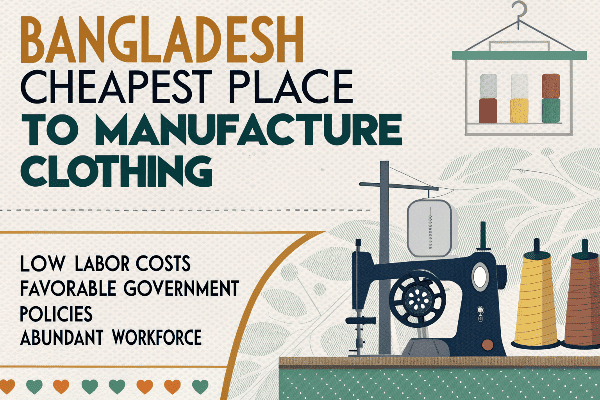
What makes Bangladesh so cost-effective?
| Factor | Details |
|---|---|
| Labor cost | Among the lowest minimum wages globally[^1] |
| Government support | Incentives and trade agreements with EU & U.S. |
| Industry focus | 80% of exports are ready-made garments (RMG)[^2] |
| Scale of production | Capable of fulfilling massive orders |
Top global brands like H&M, Zara, and Primark source heavily from Bangladesh to lower their cost per unit.
How do India and Pakistan compare?
They offer low costs with more fabric sourcing options.
India and Pakistan are also among the cheapest countries to make clothing, especially for cotton-heavy products like T-shirts, hoodies, and loungewear.
India vs. Pakistan
| Country | Strengths | Notes |
|---|---|---|
| India | Strong in cotton, dyeing, and knits | Slower production timelines, red tape |
| Pakistan | Known for denim, knitwear, and home textiles | Smaller MOQ flexibility than Bangladesh |
These countries are ideal if you want low cost plus control over fabric selection and custom processes.
Is Vietnam a cheap option for manufacturing?
Not the absolute cheapest—but a strong balance of cost and quality.
Vietnam offers lower labor costs than China and better consistency than Bangladesh, making it a popular choice for brands that want affordability plus reliability.
Why Vietnam stands out
| Feature | Benefit |
|---|---|
| Labor cost | Still lower than China[^3] |
| Factory infrastructure | Modern equipment and skilled workforce |
| Trade agreements | FTA with the U.S. and EU = lower import taxes[^4] |
| Production reliability | Better lead time and QC than South Asia |
Vietnam is often a go-to for mid-range brands looking to scale.
Is China still competitive in 2025?
China is no longer the cheapest—but it's still the most complete.
While labor costs are higher, China offers unmatched speed, flexibility, and full supply chain control, especially for complex or fast-turnaround orders.
Key advantages of China
| Advantage | Explanation |
|---|---|
| Vertical factories | Fabric → Cutting → Sewing → Branding in one site |
| Sample speed | Some factories can ship custom samples in 7 days |
| MOQs flexibility | Works with both startups and large brands |
| Export logistics | Well-developed shipping routes globally |
Many brands now use a hybrid strategy—developing in China, but mass-producing basics in Bangladesh or Vietnam.
Conclusion
Bangladesh is the cheapest country to manufacture clothing, followed by India, Pakistan, and Vietnam. However, cost alone shouldn't drive your decision—factors like quality control, communication, fabric sourcing, and shipping time matter just as much. Choose based on your budget, brand goals, and product complexity.
[^1]: Minimum wage in Bangladesh is around $95/month for garment workers. Source: ILO
[^2]: Ready-made garment sector accounts for over 80% of Bangladesh's total exports. Source: BGMEA
[^3]: Vietnam's average labor cost is 1.5–2x cheaper than China's. Source: Statista
[^4]: EVFTA and CPTPP agreements help Vietnam reduce tariffs to EU and U.S. buyers. Source: VCCI