
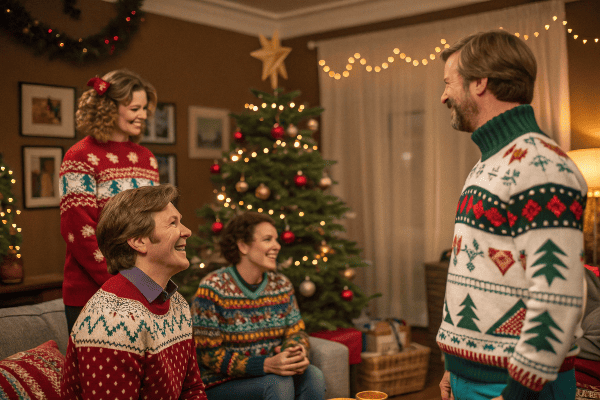
Ugly or not, Christmas sweaters have become a beloved holiday staple. But when did people start wearing them—and how did they go from cheesy to cool?
Christmas sweaters became popular in the 1980s, thanks to TV personalities and pop culture. Their ironic comeback began in the early 2000s, fueled by "ugly sweater" parties and viral internet trends.
I’ve seen firsthand how seasonal fashion cycles work in both mainstream and novelty apparel. Holiday knits are a perfect case study of how trends evolve—and come back in unexpected ways.
Table of Contents
- When did people first start wearing Christmas sweaters?
- Why did Christmas sweaters become popular in the 1980s?
- When did "ugly Christmas sweaters" become a thing?
- Are Christmas sweaters still popular today?
- Conclusion
When did people first start wearing Christmas sweaters?
The tradition goes back further than you might think.
The earliest versions of Christmas sweaters appeared in the 1950s, when holiday-themed knitwear was marketed as "Jingle Bell Sweaters."[^1]
These early sweaters were more subtle—featuring snowflakes, reindeer, or pine trees. They were festive but not over-the-top.
| Era | Style Characteristics |
|---|---|
| 1950s | Simple designs, wool blend |
| 1960s–70s | Mostly disappeared from mainstream style |
| 1980s | Bold colors, more graphics |
| 2000s+ | Ironic, humorous, intentionally tacky |
It wasn’t until the 1980s that they truly became eye-catching and mass-produced.
Why did Christmas sweaters become popular in the 1980s?
Blame it on pop culture—and TV.
In the 1980s, TV hosts and sitcom characters started wearing loud, festive sweaters during holiday specials, making them a seasonal fashion statement.[^2]
Think Bill Cosby on The Cosby Show or characters in Full House. Their colorful knits made quirky, warmhearted holiday dressing feel on-brand.
Meanwhile, manufacturers jumped on the trend—producing more commercially available holiday sweaters with Christmas trees, Santa faces, and blinking lights.
When did "ugly Christmas sweaters" become a thing?
Irony changed everything.
The early 2000s saw the rise of ugly Christmas sweater parties, where people wore the cheesiest, gaudiest knits they could find—on purpose.[^3]
This movement started in Canada and the U.S., and quickly became a viral trend. Thrift stores became go-to destinations for "authentic" retro sweaters.
| Year Range | Cultural Moment |
|---|---|
| 2001–2005 | First documented ugly sweater parties |
| 2010s | Mainstream brands enter the market |
| 2020s | Eco-friendly and DIY versions grow |
Major retailers like Target and Amazon now stock entire lines of intentionally tacky holiday knits.
Are Christmas sweaters still popular today?
Very much so—just in new forms.
Christmas sweaters remain popular, especially during December, with styles ranging from traditional knits to tech-augmented "ugly" versions.
Now they’re often used for:
- Office parties
- Family photos
- Charity runs (like Ugly Sweater 5Ks)
- Theme days at school
In fact, brands like Tipsy Elves and Vogue-featured designers have created upscale versions with sequins, embroidery, and premium yarns. Some even include built-in lights or Bluetooth sound effects[^4].
Conclusion
Christmas sweaters became popular in the 1980s due to TV and pop culture, but their ironic, widespread appeal took off in the 2000s with the rise of ugly sweater parties. Today, they remain a festive fashion favorite for all ages—whether you wear them for laughs or style.
[^1]: “The Ugly History of the Christmas Sweater,” Smithsonian Magazine. Read more
[^2]: “A Brief History of the Ugly Christmas Sweater,” Time Magazine. Read more
[^3]: “Ugly Sweater Parties: How This Bizarre Tradition Started,” BBC. Read more
[^4]: “Christmas Sweaters Get a Luxury Upgrade,” Vogue. Read more