

Running Apparel Manufacturer: How Do You Make Running Clothing That Feels Light and Never Chafes?
Your running shorts look perfect in the product photos.
The fabric feels light.
The liner feels soft.
The phone pocket looks secure.
Then somebody actually runs in them.
After three kilometers, the inner thigh starts rubbing.
The phone begins bouncing with every stride.
The drawcord creates a pressure point at the waist.
The singlet starts clinging more than expected once it is wet.
A sample that felt comfortable for five minutes suddenly feels very different after:
thousands of repeated strides.
That is why running apparel needs more than a good-looking fit sample.
Good running clothing should be developed around repeated movement, heat, sweat, friction, storage, and garment stability. Fabric composition alone does not prove quick drying, breathability, stretch recovery, or comfort. Seam placement, liner fit, pocket position, waistband pressure, garment weight, and real running tests all matter.
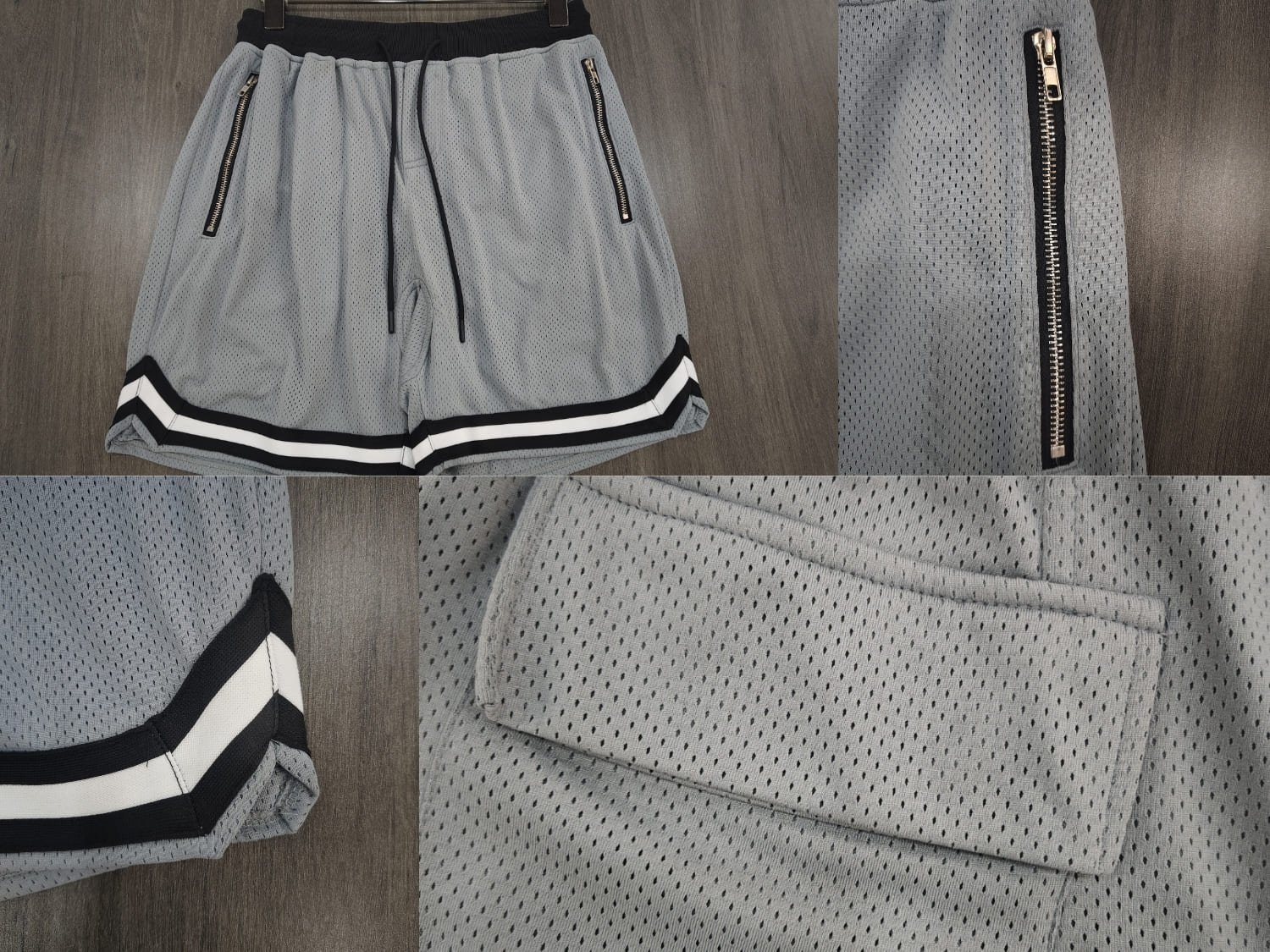
Running apparel may look simple.
A singlet can have:
very few seams.
A split short can use:
very little fabric.
But when the garment is worn for:
5 km
10 km
a half marathon
or a marathon,
small mistakes repeat thousands of times.
That is what makes running product development different.
Table of Contents
- What Does a Running Apparel Manufacturer Make?
- Which Fabrics Work Best for Running?
- How Do You Prevent Chafing and Discomfort?
- Which Details Do Runners Actually Notice?
- How Should You Brand Running Apparel?
- What MOQ, Cost, and Timing Should You Expect?
- Conclusion
What Does a Running Apparel Manufacturer Make?
A running range normally combines:
lightweight tops,
shorts,
tights,
and outer layers.
A running apparel manufacturer may produce running tees, singlets, long sleeves, split shorts, lined shorts, 2-in-1 shorts, half tights, full tights, lightweight vests, and running jackets. The correct construction depends on distance, climate, runner preference, storage needs, and intended training intensity.
Running Tees
A running tee may use:
- Lightweight jersey
- Mesh-knit zones
- Raglan sleeve
- Set-in sleeve
The main development questions are:
- Does it cling excessively when wet?
- Does the hem ride?
- Do the underarm seams rub?
- Does the neckline stay comfortable?
Singlets
Singlets remove more fabric from:
the shoulders and arms.
But the armhole shape becomes important.
Too high:
it can rub.
Too low:
it may create too much movement or exposure.
Long-Sleeve Running Tops
These can work for:
- Cool-weather running
- Warm-up
- Early-morning training
Possible details include:
- Thumbholes
- Higher neck
- Lightweight brushed interior
But the fabric still needs to suit:
the intended temperature.
Split Shorts
A racing-style split short may use:
- Very light woven shell
- Large side split
- Built-in brief liner
The split allows:
greater stride movement.
But the exact split height should be:
fit-tested.
Lined Running Shorts
Liners may use:
- Brief shape
- Boxer shape
- Stretch mesh
The liner is a major comfort component.
It should not be treated as:
a hidden afterthought.
2-in-1 Shorts
These combine:
- Woven outer short
- Stretch inner short
They can offer:
coverage and storage.
Some runners prefer them because the inner short can reduce direct thigh-to-thigh contact.
But 2-in-1 construction does not automatically mean:
no chafing.
The inner short still needs the correct:
- Length
- Tension
- Seams
- Fabric
Half Tights
Half tights are popular because they can combine:
- Close fit
- Reduced fabric movement
- Storage
Possible pockets include:
- Side thigh
- Back waistband
Full Tights
Full tights can be used for:
- Cool weather
- Training
- Trail running
Check:
- Knee mobility
- Waist stability
- Ankle opening
- Pocket placement
Running Jackets
A running shell may prioritize:
- Low weight
- Wind resistance
- Packability
- Ventilation
But a garment marketed as:
water-repellent
is not automatically:
waterproof.
That claim needs separate specification and testing.
Our Production Approach
We manufacture products including:
- Running tees
- Singlets
- Long sleeves
- Half tights
- Full tights
- Shorts
- Lightweight jackets
through our garment-production operation.
Specialist processes such as:
- Printing
- Reflective transfers
- Embroidery
may be completed through long-term partner workshops that we coordinate directly.
Which Fabrics Work Best for Running?
Running creates:
heat,
sweat,
repeated movement,
and friction.
But the answer is not simply:
choose the lightest polyester fabric.
Running fabrics should be selected according to weight, moisture behavior, drying, stretch, recovery, surface durability, transparency, hand feel, and climate. Polyester, nylon, mesh, stretch woven, and other textiles can all work, but the actual fabric needs to be evaluated—not just the fiber-content label.
Polyester/Elastane Knits
These are common for:
- Tees
- Long sleeves
- Training tops
They can provide:
- Stretch
- Wide color options
- Low garment weight
But:
polyester does not automatically mean quick-dry.
The final result depends on:
- Yarn
- Knit
- GSM
- Finish
- Moisture uptake
Mesh and Open Knits
Mesh can increase:
air movement
in certain applications.
Possible placements include:
- Back
- Underarm
- Side body
But a more open fabric may also create:
- Transparency
- Lower snag resistance
depending on construction.
Woven Polyester or Nylon
Light woven textiles are common for:
running shorts.
They may provide:
- Low weight
- Structure
- Fast movement around the leg
But the actual hand can vary from:
soft and quiet
to:
crisp and noisy.
Stretch Woven
Stretch woven can be useful for:
training shorts
when more mobility is required.
But woven fabric does not need elastane to have:
some mechanical stretch.
Nylon/Elastane
This can work for:
- Half tights
- Full tights
- Compression-style liners
Some nylon constructions have:
very smooth hand.
But nylon does not automatically mean:
better quality
or:
better recovery.
Polyester/Elastane for Tights
Polyester/elastane can also work well.
It may be useful for:
- Printed products
- Team programs
depending on:
the fabric and print method.
Lightweight Jacket Fabrics
Possible options include:
- Nylon
- Polyester
- Ripstop
The correct shell depends on:
- Wind target
- Packability
- Water performance
- Noise
- Durability
Is Lighter Fabric Always Better?
No.
A lighter fabric can reduce:
garment weight.
But very light fabric may also create:
- Transparency
- Cling
- Reduced durability
- Less structure
The correct question is:
what is the lightest fabric that still performs properly for this product?
Does Lightweight Fabric Automatically Dry Faster?
No.
Drying behavior is influenced by:
- Fiber
- Fabric construction
- Surface area
- Thickness
- Finish
- Water uptake
So a 100 GSM fabric is not automatically:
faster-drying
than every 130 GSM textile.
If drying performance is an important product claim:
evaluate the actual fabric under a defined test or internal comparison method.
Do not build the claim only from:
GSM.
How Important Is Stretch and Recovery?
For tights and liners:
very important.
But:
stretch percentage is not the same as recovery.
ISO 20932-1:2018[^1] describes methods for measuring fabric elasticity and related properties.
ISO reviewed and confirmed this standard in 2024.[^1]
This matters because two fabrics with:
the same elastane percentage
can recover differently after:
repeated extension.
For running tights, poor recovery can contribute to:
- Bagging
- Pocket movement
- Waist instability
after wear.
How Do You Prevent Chafing and Discomfort?
Chafing is not caused by one thing.
It can involve:
- Friction
- Moisture
- Pressure
- Repeated movement
- Garment fit
- Seam position
Anti-chafe design should focus on the complete contact system: fabric surface, seam location, seam construction, liner fit, garment tension, labels, waistbands, and repeated movement. No single seam type can guarantee that a garment will never chafe.
Seam Placement Comes First
A beautifully sewn seam can still rub if it sits in:
the wrong place.
High-friction areas can include:
- Inner thigh
- Underarm
- Side chest
- Waist
depending on the product and runner.
Sometimes moving a seam:
a small distance
makes a major difference.
Does Everything Need Flatlock?
No.
Flatlock can create a:
low-profile seam
and can be useful in certain areas.
But running apparel does not need:
flatlock everywhere.
A clean:
- Overlock
- Coverstitch
- Other suitable seam
can also work depending on:
- Fabric
- Placement
- Construction
The objective is:
comfort.
Not:
maximum number of technical seam types.
Liner Fit
A liner that is too loose may:
- Move
- Fold
- Bunch
A liner that is too tight may:
- Cut into the leg
- Create pressure
- Pull the outer short
So the liner needs its own:
fit development.
Brief Liner vs Boxer Liner
Neither is automatically better.
A brief liner can provide:
minimal coverage and low weight.
A boxer-style liner can provide:
more thigh coverage.
The correct choice depends on:
- Runner
- Distance
- Climate
- Product positioning
Do 2-in-1 Shorts Prevent Chafing?
They can help some runners.
But not universally.
If the inner short:
- Rides up
- Has the wrong seam placement
- Is too tight
it can still create discomfort.
So test:
the actual product.
Waistband Pressure
A running waistband should:
stay secure
without becoming:
a pressure point.
A wider waistband can distribute load.
But wide does not automatically mean:
comfortable.
Check:
- Elastic force
- Garment waist
- Drawcord
- Pocket load
together.
Drawcords
An internal drawcord can help:
waist security.
But bulky knots, hard tips, or poor placement can:
press against the body.
Test the garment while:
running,
not just standing.
Labels
Possible approaches include:
- Printed label
- Heat-transfer label
- Soft side label
But even a printed label can be uncomfortable if:
the print becomes stiff.
Wear-test it.
Why Wear Testing Matters More for Running Apparel
A ten-second fitting cannot reveal:
distance-related friction.
A useful test should include:
real running.
For example:
- Easy run
- Faster run
- Longer run
depending on the intended product.
Ask testers about:
- Chafing
- Waist movement
- Liner movement
- Sweat cling
- Pocket bounce
- Heat
Then review the pattern.
The goal is not to claim:
“never chafes.”
That is too absolute because body shape, distance, climate, and individual sensitivity vary.
A better product goal is:
designed to minimize common friction points.
Which Details Do Runners Actually Notice?
Runners quickly notice:
anything that moves unnecessarily.
Storage, waistband stability, side splits, liner fit, ventilation, reflective elements, thumbholes, and packability should all be evaluated at actual running pace. A feature is only useful if it works while the body is moving repeatedly.
Phone Pockets
A pocket may fit a phone.
That does not mean it is:
a good running pocket.
The real questions are:
- Does it bounce?
- Does it pull the garment?
- Can the phone move sideways?
- Is it easy to remove?
Thigh Pocket
On half tights, a close-fitting thigh pocket can work well because:
the fabric holds the phone against the leg.
But this still depends on:
- Pocket dimensions
- Fabric recovery
- Phone weight
- Garment size
Waistband Pocket
Back waistband storage can work for:
- Phone
- Keys
- Gel
depending on size.
The waistband needs enough stability to carry:
the load.
Zip Pocket
Small zip pockets can provide secure storage for:
- Keys
- Card
But the zipper and pocket bag add:
weight and bulk.
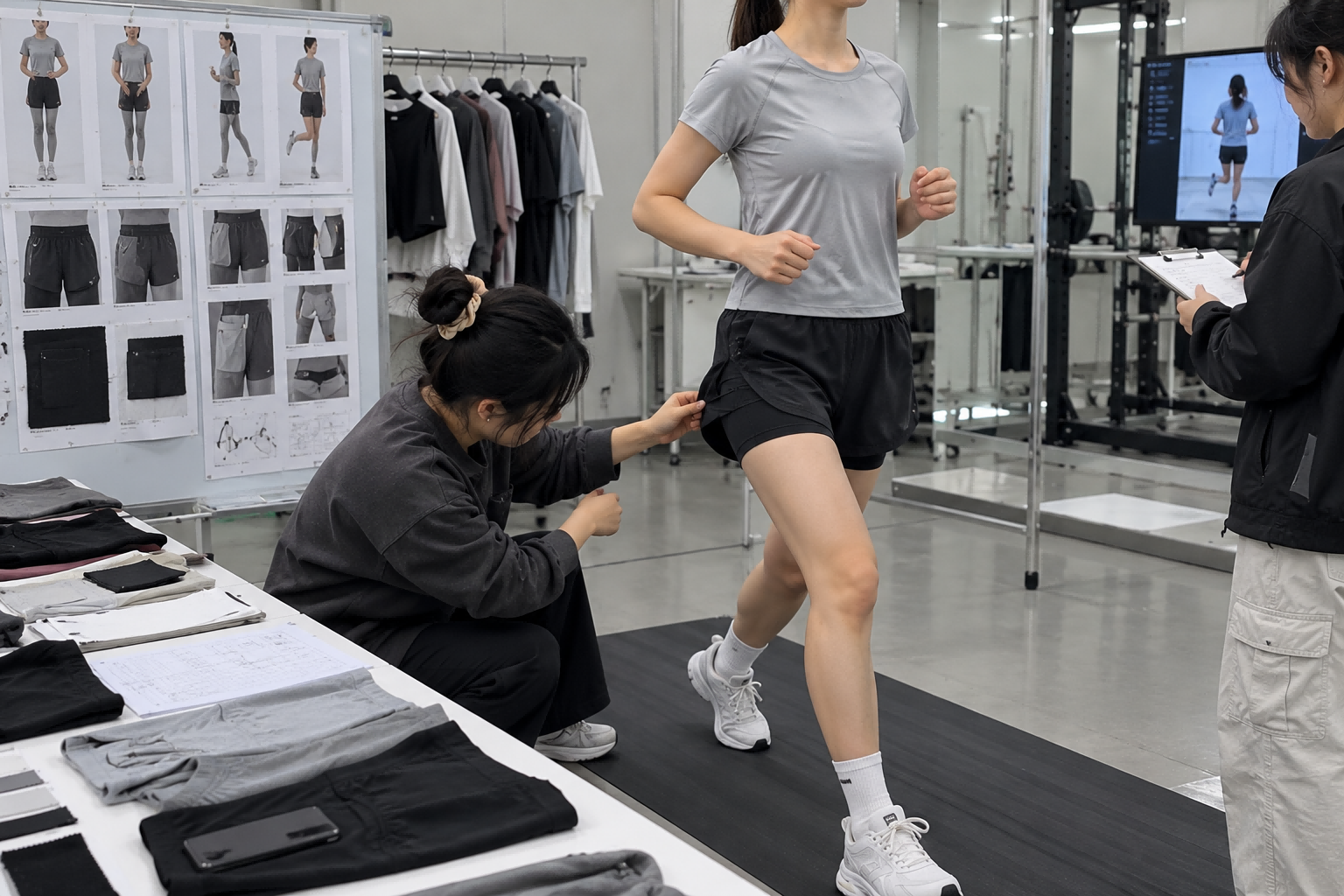
Pocket Bounce Test
Load the actual pocket.
Then run.
Do not shake the garment:
by hand
and call it tested.
Check:
- Jog
- Faster pace
- Direction changes
where relevant.
Side Splits
A split hem can increase:
leg movement
in short running shorts.
But higher is not always better.
Check:
- Coverage
- Movement
- Appearance
on the target customer.
Reflective Details
Reflective logos, tapes, and trims can improve:
visibility in low light.
But:
reflective decoration does not automatically make a garment certified high-visibility safety apparel.
The current ANSI/ISEA 107-2026[^2] establishes requirements for high-visibility safety apparel, including:
- Background material
- Retroreflective material
- Garment design
- Performance classes
- Marking
- Testing
A small reflective running logo:
does not establish compliance with this standard.
Treat it as:
visibility detail
unless the complete garment is specifically designed and evaluated for a certification program.
Thumbholes
Thumbholes can help:
- Keep sleeves down
- Cover part of the hand
in cooler weather.
But check:
- Hole size
- Sleeve length
- Wrist tension
A thumbhole should not force the sleeve into:
constant tension.
Packable Jackets
Some running shells fold into:
their own pocket.
This is useful.
But it adds:
construction complexity.
Check whether the packed garment is:
small enough to carry
and whether the zipper still functions:
after repeated packing.
How Do You Check Durability?
Running garments can experience:
repeated friction.
Tights and liners may rub against:
- Skin
- Other fabric
- Equipment
- Waist packs
ISO 12947-2:2016[^3] specifies a Martindale method for determining abrasion resistance of textile fabrics by specimen breakdown.
ISO reviewed and confirmed this standard in 2023.[^3]
This does not replace:
real wear testing.
But it gives a controlled way to compare:
fabric abrasion performance.
What About Pilling?
Soft running and warm-up fabrics may also develop:
- Fuzz
- Pills
- Surface matting
ISO 12945-2:2020[^4] provides a modified Martindale method for evaluating:
pilling, fuzzing, and matting.
This can be useful for:
- Brushed long sleeves
- Soft tights
- Warm-up layers
A fabric can feel extremely soft initially
and still develop:
poor surface appearance
after repeated use.
How Should You Brand Running Apparel?
Running branding usually works best when it does not fight:
the garment.
Decoration should be selected according to fabric weight, stretch, heat sensitivity, artwork size, placement, and contact with the body. Lightweight transfers, reflective graphics, sublimation, printed labels, and small branding details can all work when tested on the actual substrate.
Heat Transfer
Heat transfers can work well for:
- Chest logos
- Shorts
- Tights
But:
heat transfer = always lightweight and flexible
is too broad.
There are many transfer systems.
Check:
- Film thickness
- Stretch
- Adhesion
- Heat setting
- Wash performance
Reflective Transfer
This can combine:
branding
and:
low-light visibility.
But again:
it is not automatically certified safety apparel.
Sublimation
Traditional sublimation is especially suited to:
appropriate polyester-based fabrics,
particularly:
white or light-color polyester substrates.
It is useful for:
- All-over singlets
- Printed tees
- Tights
But do not say:
sublimation works on every polyester fabric.
Fabric construction, dye, finish, stretch, and processing conditions still matter.
Does Sublimation Never Fade?
No printing method should be sold with an absolute:
“never.”
Sublimation does not normally form the same peelable surface film as many transfers.
But performance can still depend on:
- Fabric
- Dye
- Heat process
- Washing
- Exposure
Cotton All-Over Printing
Do not say:
cotton cannot be all-over printed.
Cotton can use:
other textile-print systems.
Traditional dye sublimation simply has a different:
substrate requirement.
Embroidery
Small embroidery may work on:
- Jacket
- Heavier warm layer
But it may be less suitable on:
very light singlets
because the backing and stitch density can add:
- Weight
- Stiffness
- Friction
How Should Running Garments Be Wash-Tested?
A running garment is likely to be:
washed frequently.
So care performance matters.
ISO 6330:2021[^5] specifies standardized domestic washing and drying procedures for textile testing.
Different:
- Machines
- Detergents
- Drying methods
can affect the results.[^5]
After washing, check:
- Fit
- Waistband
- Pocket shape
- Reflective trim
- Liner
- Fabric surface
Care Label
For U.S. apparel, the FTC Care Labeling Rule[^6] requires covered manufacturers and importers to provide care instructions and have a reasonable basis for those instructions.
That means you should not automatically put:
Machine Wash Cold / Tumble Dry Low
on every performance garment.
The complete product may include:
- Stretch fabric
- Reflective transfer
- Elastic
- Zipper
and the care instruction needs to work for:
all of them.
What MOQ, Cost, and Timing Should You Expect?
Running collections often combine:
knit
and:
woven
garments.
The MOQ depends on the product.
Typical Starting MOQ
For our standard programs:
| Product | Typical starting point |
|---|---|
| Running tee | Around 100 pcs/style |
| Singlet | Around 100 pcs/style |
| Running shorts | Around 100 pcs/style |
| Half tights | Around 150 pcs/style |
| Full tights | Around 150 pcs/style |
| Running jacket | Around 50 pcs/style |
Final MOQ depends on:
- Fabric
- Colors
- Construction
- Trims
- Decoration
Fabric
Do not publish:
nylon/elastane always costs more.
Actual cost depends on:
- Yarn
- GSM
- Width
- Finish
- Supplier
- Order quantity
Liners
A lined running short adds:
- Liner fabric
- Pattern
- Sewing
A 2-in-1 short adds even more:
material and construction.
Pockets
Phone pockets and zip pockets require:
additional pieces and sewing.
They also require:
fit testing.
Flatlock
Flatlock can add cost because it uses:
different equipment
and additional production planning.
But only use it where:
it benefits the product.
Reflective Decoration
Reflective materials may cost more than:
standard decoration.
The actual price depends on:
- Supplier
- Size
- Placement
- Performance requirement
Ventilation Panels
Mesh adds:
another material
and:
additional seam operations.
Colors
A 100-piece style in:
10 colors
can be much harder to source efficiently than:
100 pieces in one or two colors.
For first programs:
keep the color range focused.
Sample and Bulk Timing
For standard programs using available materials:
Sampling: approximately 5–14 days
For normal bulk orders:
Bulk production: approximately 20–30 days
after:
- Final sample approval
- Deposit
- Materials ready
Custom:
- Fabric
- Reflective trims
- Printing
- Testing
can extend development.
Payment
For new bulk orders, our normal structure is:
50% before production + 50% before shipment.
How Should a New Running Brand Build Its First Range?
Start with:
fewer products
and make them work well.
Option 1: Road Running Core
- Lightweight tee
- Split short
- Half tight
Option 2: Training Range
- Tee
- 2-in-1 short
- Lightweight jacket
Option 3: Race Collection
- Singlet
- Race short
- Half tight
Then wear-test each product.
Develop One Strong Short First
Shorts can become:
the signature product.
Define:
- Inseam
- Split
- Liner
- Waist
- Storage
and keep the approved pattern.
Test With Real Phones
Do not use:
a foam block.
Use representative:
real phones.
Different phones vary in:
- Size
- Weight
so define what the pocket is designed to hold.
Test With Different Body Shapes
Pocket movement and chafing can change depending on:
- Thigh size
- Hip shape
- Waist
- Running gait
One fit model cannot represent:
every runner.
Do Not Promise “Never Chafes”
That is an absolute claim.
A better statement is:
developed to reduce common friction points.
Then support it with:
real wear testing.
Green Flags and Red Flags
| Green flag | Red flag |
|---|---|
| Tests garments on real runs | Approves from a hanger |
| Evaluates actual drying behavior | Calls every polyester fabric quick-dry |
| Places seams around friction zones | Uses flatlock everywhere without reason |
| Develops liners separately | Treats liner as an afterthought |
| Tests phone pockets at running pace | Checks pocket only while standing |
| Checks stretch and recovery | Chooses tights from spandex % alone |
| Tests abrasion and pilling where relevant | Judges durability only from softness |
| Uses reflective trim accurately | Calls a reflective logo safety certified |
| Tests decoration on the actual fabric | Uses one transfer setting for everything |
| Uses appropriate sublimation substrates | Says all polyester is sublimation-ready |
| Wash-tests the complete garment | Tests only raw fabric |
| Gives evidence-based care instructions | Copies the same care label onto every style |
Conclusion
Great running apparel should:
get out of the runner's way.
The runner should not be thinking about:
the seam under the arm.
They should not be pulling down:
the liner.
They should not be holding:
the phone
to stop it bouncing.
And they should not be tightening the waistband every:
two kilometers.
Start with:
the actual use.
Is this garment for:
- Racing?
- Daily training?
- Long distance?
- Trail?
- Cold-weather running?
Then choose the fabric.
Do not choose polyester only because:
“it is quick-dry.”
Do not choose the lightest GSM only because:
“lighter is faster.”
Evaluate:
- Weight
- Drying
- Stretch
- Recovery
- Pilling
- Abrasion
- Hand
- Opacity
on the real textile.
Then develop the anti-chafe system.
Look at:
- Seam placement
- Liner fit
- Waistband
- Labels
- Drawcord
together.
A flat seam in the wrong place can still:
rub.
A 2-in-1 short with the wrong liner can still:
ride up.
Next:
build the storage.
Put a real phone in the pocket.
Then run.
If it bounces:
change the pocket.
Then plan the branding.
Use:
- Lightweight transfers
- Reflective graphics
- Sublimation
- Small labels
according to:
the actual fabric and garment.
If you add reflective detail:
describe it accurately.
It may improve visibility.
That does not make the product:
certified high-visibility safety apparel.
Finally:
wash the garment.
Run in it again.
Because running apparel does not need to feel perfect for:
30 seconds in a showroom.
It needs to remain comfortable through:
thousands of repeated strides.
That is what separates:
a lightweight sports garment
from:
well-developed running apparel.
Footnotes & References
[^1]: International Organization for Standardization — ISO 20932-1:2018, Textiles — Determination of the Elasticity of Fabrics — Part 1: Strip Tests. Describes methods using straight strips or loops of fabric to measure elasticity and related fabric properties. ISO reviewed and confirmed the standard in 2024, so it remains current.
https://www.iso.org/standard/69489.html
[^2]: International Safety Equipment Association — ANSI/ISEA 107-2026, American National Standard for High-Visibility Safety Apparel. The 2026 standard establishes requirements covering background material, retroreflective material, garment design, marking, testing, and performance classes for high-visibility safety apparel. A decorative reflective running logo or trim alone does not demonstrate that a complete garment complies with the standard.
https://safetyequipment.org/high-visibility-standard/
[^3]: International Organization for Standardization — ISO 12947-2:2016, Textiles — Determination of the Abrasion Resistance of Fabrics by the Martindale Method — Part 2: Determination of Specimen Breakdown. Specifies a procedure for determining textile-fabric breakdown during controlled Martindale abrasion testing. ISO reviewed and confirmed this edition in 2023.
https://www.iso.org/standard/61058.html
[^4]: International Organization for Standardization — ISO 12945-2:2020, Textiles — Determination of Fabric Propensity to Surface Pilling, Fuzzing or Matting — Part 2: Modified Martindale Method. Specifies a controlled method for evaluating textile-fabric resistance to pilling, fuzzing, and matting.
https://www.iso.org/standard/75375.html
[^5]: International Organization for Standardization — ISO 6330:2021, Textiles — Domestic Washing and Drying Procedures for Textile Testing. Specifies standardized domestic washing and drying procedures for fabrics, garments, and textile articles. ISO notes that washing-machine type, detergent, drying procedure, and other parameters can influence test results.
https://www.iso.org/standard/75934.html
[^6]: U.S. Federal Trade Commission — Care Labeling Rule, 16 CFR Part 423. Requires covered manufacturers and importers of textile wearing apparel to provide regular care instructions and to have a reasonable basis supported by reliable evidence for those instructions.
https://www.ftc.gov/legal-library/browse/rules/care-labeling-textile-wearing-apparel-certain-piece-goods