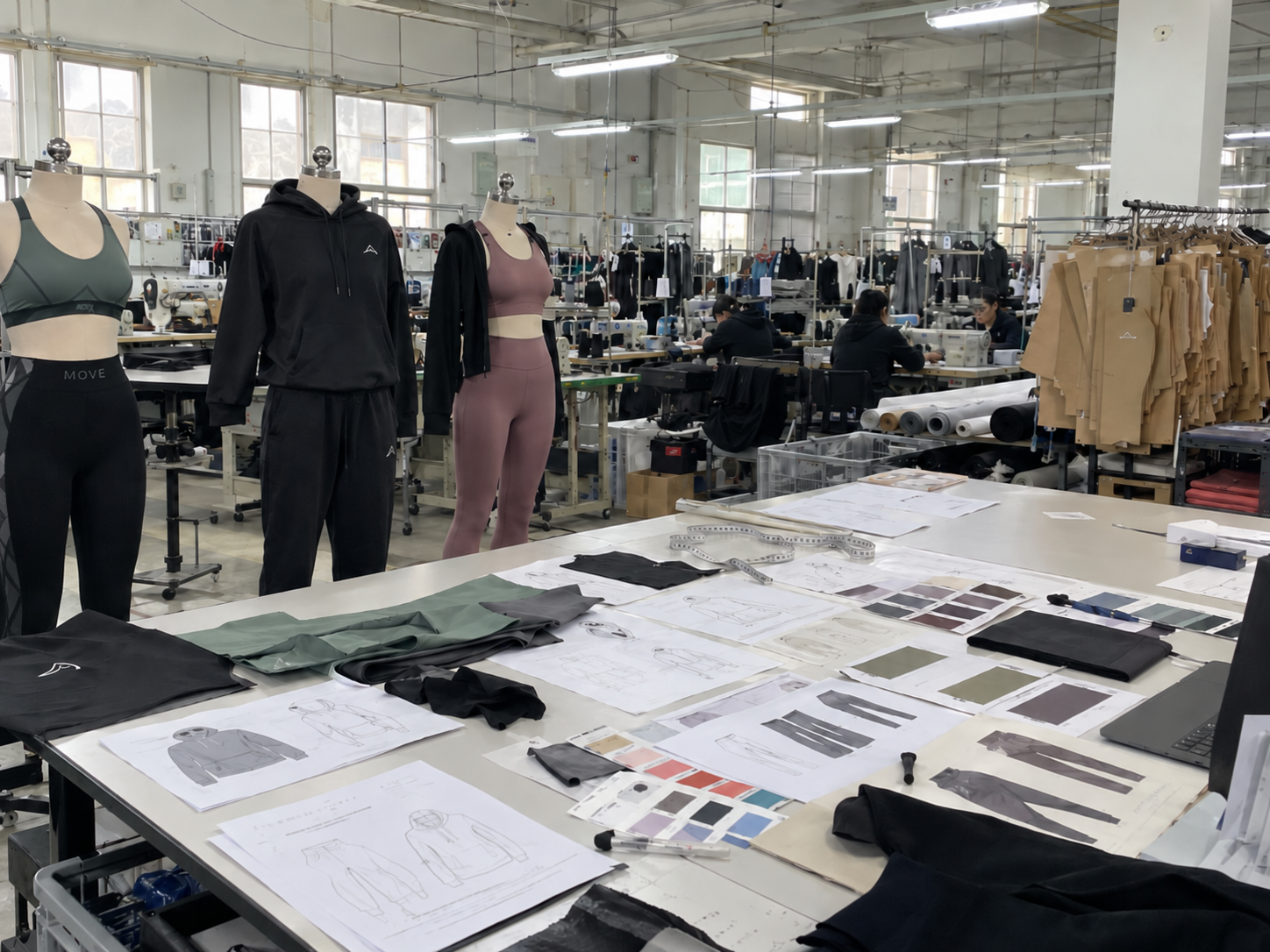
Many startup brands like ODM because they can start from an existing sportswear style instead of developing everything from zero. But they still want the final product to feel like their own brand. The key question is how much of an ODM sportswear product can actually be customized.
Custom sportswear ODM can usually be customized in fabric, GSM, color, fit, measurements, logo placement, printing, embroidery, trims, labels, packaging, and performance features. Depending on the manufacturer, buyers may also change panel lines, waistbands, pockets, zippers, reflective details, mesh areas, and other construction features while keeping the factory’s basic pattern or product structure.
In my experience, ODM works best when the buyer understands which parts of the garment should stay standard and which parts really need to change. If everything is changed, the project starts becoming OEM. If nothing changes except the logo, the product may not feel unique enough.
Table of Contents
- What Does Sportswear ODM Mean?
- What Parts of Sportswear Can Be Customized in ODM Production?
- Can Fabric and GSM Be Customized?
- Can the Fit and Measurements Be Changed?
- What Color Customization Options Are Available?
- What Logo and Branding Options Can Be Added?
- What Printing and Embroidery Methods Work for Sportswear?
- Can Performance Features Be Customized?
- What Trims and Accessories Can Be Changed?
- Can Labels and Packaging Be Fully Customized?
- Can Panel Lines and Garment Construction Be Changed?
- How Much Customization Is Too Much for ODM?
- How Do Customization Options Affect MOQ?
- How Do Customization Choices Affect Sample Cost and Lead Time?
- Which Customization Options Matter Most for Startup Sportswear Brands?
- What Information Should Buyers Send to an ODM Sportswear Manufacturer?
- Conclusion
- Footnotes & References
What Does Sportswear ODM Mean?
ODM is useful when a brand wants to move faster without creating every technical detail from the beginning.
Sportswear ODM means the manufacturer already has an existing garment design, pattern, or product base that the buyer can customize. The buyer may change materials, colors, measurements, branding, trims, packaging, and selected construction details while using the factory’s existing development as the starting point.
For example, I may already have a basic women’s sports legging pattern.
The buyer likes:
- The waistband
- The basic fit
- The leg shape
- The seam structure
But the buyer wants to change:
- Fabric
- Color
- Logo
- Waist height
- Labels
- Packaging
That is a typical ODM project.
ODM Does Not Mean the Product Must Stay Basic
Some buyers think ODM only means adding a logo to an existing garment.
That is one level of ODM.
But it is not the only level.
A flexible manufacturer may allow buyers to adjust many details while keeping the main pattern or basic construction.
This can help a brand save development time without selling a completely generic product.
What Parts of Sportswear Can Be Customized in ODM Production?
Sportswear has many elements that can be changed because activewear combines design, performance, and branding.
The main customization areas in sportswear ODM include fabric, weight, stretch, color, fit, measurements, logo method, artwork placement, waistbands, pockets, seams, mesh panels, zippers, reflective details, labels, hangtags, and packaging. The exact range depends on how much the manufacturer allows the original design to be modified.
I normally divide customization into five groups.
| Customization Area | Examples |
|---|---|
| Material | Polyester, nylon, spandex, recycled blends |
| Fit | Slim, compression, regular, oversized |
| Appearance | Colors, prints, contrast panels |
| Branding | Logo, labels, hangtags |
| Function | Pockets, mesh, quick-dry, reflective details |
This is useful because not every brand needs to customize everything.
A startup may only need to change the fabric, fit, logo, and packaging.
An established sportswear brand may want much more control.
Can Fabric and GSM Be Customized?
Fabric is one of the most important parts of sportswear because it affects stretch, comfort, recovery, moisture control, and the final fit.
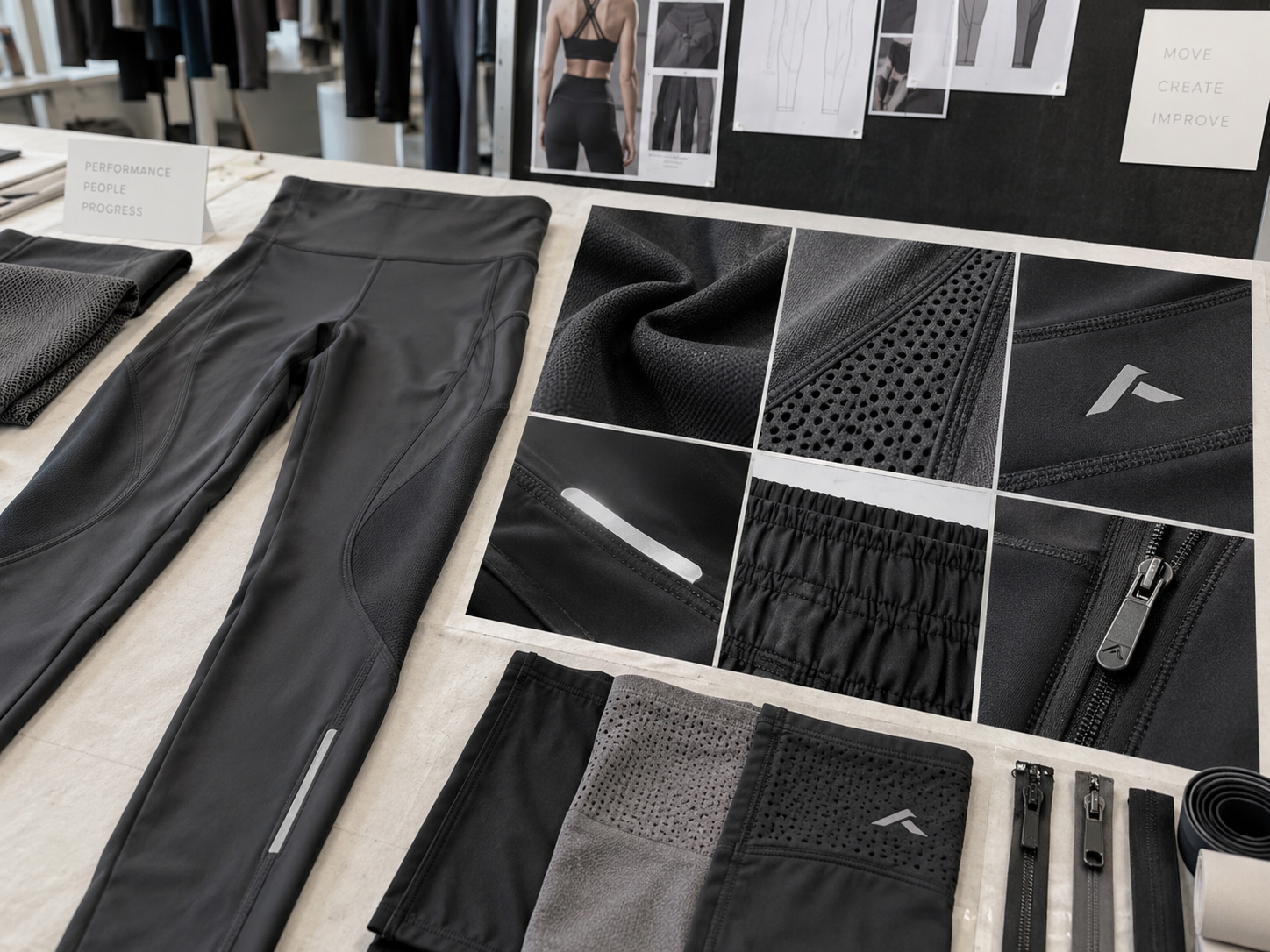
Yes. Sportswear ODM fabrics can often be customized by fiber content, GSM, stretch level, surface texture, brushing, moisture-wicking treatment, quick-dry performance, and recycled content. Common choices include polyester-spandex, nylon-spandex, cotton-spandex, and recycled polyester blends.
Common Sportswear Fabric Options
I often see buyers choose from:
- Polyester + spandex
- Nylon + spandex
- Recycled polyester + spandex
- Cotton + spandex
- Modal blends
- Mesh fabrics
- Ribbed stretch fabrics
- Interlock fabrics
- Compression fabrics
Each fabric gives a different result.
For brands considering recycled polyester, Textile Exchange provides a useful overview of polyester and recycled polyester in the textile industry[^1]. Recycled content should be treated as a material sourcing specification rather than only a marketing description, especially when the brand intends to make certified recycled-content claims.
Polyester-Spandex
This is common for:
- Gym tops
- Running shirts
- Leggings
- Sports sets
It can offer:
- Good moisture management
- Fast drying
- Good color stability
- Strong durability
Nylon-Spandex
Nylon blends often feel smoother and softer.
They are popular for:
- Yoga wear
- Leggings
- Sports bras
- Premium activewear
The hand feel can be more important than the fiber content itself.
GSM Also Matters
A 160 GSM top and a 280 GSM legging behave very differently.
The buyer should think about:
- Opacity
- Weight
- Compression
- Breathability
- Season
- End use
I do not recommend choosing GSM only because another brand uses that number.
The correct fabric should match the product.
Can the Fit and Measurements Be Changed?
Yes. Fit is one of the most valuable customization options in ODM.
ODM sportswear measurements can usually be adjusted even when the factory provides the base pattern. Buyers may change body length, chest width, sleeve length, waist measurement, waistband height, inseam, rise, leg opening, or overall compression level. Larger structural changes may require new pattern development and move the project closer to OEM.
Small Fit Changes Are Common
For example, a buyer may like our existing leggings but want:
- A higher waistband
- 2 cm shorter inseam
- Slightly more room at the hip
- Tighter ankle opening
These are normal adjustments.
Major Fit Changes Take More Work
If a buyer says:
Keep this legging, but change the entire rise, waistband structure, side seams, crotch shape, and leg panel construction.
That is no longer a simple measurement change.
The pattern maker may need to rebuild large parts of the garment.
At that point, the ODM advantage becomes smaller.
Compression Level Needs Fabric and Pattern to Work Together
Sportswear fit is not only about measurements.
A compression legging also depends on:
- Fabric stretch
- Fabric recovery
- Pattern reduction
- Seam construction
If the buyer changes the fabric, the fit may also need to change.
This is why I normally test activewear fabric and fit together.
What Color Customization Options Are Available?
Color is one of the easiest ways to turn a factory base style into a product that feels closer to the buyer’s brand.
Sportswear ODM can usually be customized using stock colors, custom Pantone colors, contrast color panels, color blocking, printed patterns, heather effects, and in some cases garment dyeing. Stock colors support lower MOQs, while custom dye colors normally need higher fabric quantities and longer lead times.
Stock Color Is the Fastest Option
For startup brands, stock colors are often useful.
Common colors may include:
- Black
- White
- Grey
- Navy
- Beige
- Brown
- Basic seasonal shades
If the correct fabric is already available, sampling can start quickly.
Custom Pantone Color Gives More Brand Control
A brand may want a very specific green, blue, pink, or neutral tone.
That can usually be done.
But the fabric may need custom dyeing.
This affects:
- MOQ
- Sample time
- Color approval
- Fabric cost
For textile color development, Pantone's official Fashion, Home + Interiors system[^2] explains that TCX references are designed for soft surfaces such as textiles and apparel.
Color Blocking Can Change the Product Without Changing Everything
This is a useful ODM strategy.
A base sports top can feel completely different when the buyer changes:
- Side panels
- Sleeve panels
- Collar
- Waistband
- Stitching
- Binding
The construction stays similar, but the visual identity becomes more distinct.
What Logo and Branding Options Can Be Added?
Branding is usually the first customization request from private label buyers.
Sportswear ODM can include custom chest logos, back logos, sleeve logos, waistband branding, neck branding, woven labels, heat-transfer labels, care labels, hangtags, and branded packaging. Logos can be added through embroidery, screen printing, DTF, heat transfer, silicone printing, reflective transfer, or other techniques.
Logo Placement Matters
Sportswear logos are often smaller than streetwear graphics.
Common placements include:
- Left chest
- Center chest
- Upper back
- Sleeve
- Leg
- Waistband
- Hip
- Back waistband
The right placement depends on the garment.
Heat-Transfer Logos Are Common in Activewear
Heat transfer works well because:
- It can stay lightweight
- It works on stretch fabrics
- It looks clean
- It supports small logos
For leggings and sports bras, I often prefer lightweight decoration over heavy embroidery.
Silicone Logos Can Give a More Technical Look
A small silicone logo can work well on:
- Gym sets
- Running garments
- Technical jackets
- Premium activewear
It creates a clean, slightly raised finish.
What Printing and Embroidery Methods Work for Sportswear?
Not every decoration method works equally well on stretch fabric.
Common sportswear decoration methods include heat transfer, DTF, silicone print, reflective transfer, screen printing, sublimation, and lightweight embroidery. Heat-transfer and sublimation methods are especially useful for performance fabrics because they can preserve flexibility, while heavy embroidery is better suited to thicker garments and non-stretch areas.
Sublimation Is Useful for Full-Color Sportswear
Sublimation works especially well on polyester.
It can create:
- Full-body graphics
- Gradient designs
- Repeating patterns
- Team uniforms
- Cycling wear
- Running tops
The color becomes part of the fabric surface.
This helps keep the garment lightweight.
Embroidery Needs More Care
Embroidery can work on:
- Tracksuits
- Jackets
- Heavy sports tops
- Sweatshirts
- Polo-style sports garments
But I would not use a large dense embroidery on a lightweight compression top.
The fabric may distort.
Decoration Should Not Damage Performance
This is important.
A large decoration can affect:
- Stretch
- Breathability
- Weight
- Comfort
I always think about function before choosing the decoration technique.
Can Performance Features Be Customized?
Yes. Performance customization is one of the most important differences between normal fashion garments and sportswear.
Sportswear ODM can often include customized quick-dry properties, moisture-wicking finishes, UV protection, compression, breathability, mesh ventilation, four-way stretch, anti-pilling finishes, reflective details, and other performance features. The manufacturer should confirm whether the feature comes from the fabric itself, a finishing treatment, or garment construction.
Quick-Dry and Moisture-Wicking
These are common requests.
But they should not only be marketing words.
The performance may come from:
- Fiber structure
- Fabric construction
- Chemical finish
If performance matters to the brand, I recommend confirming how the supplier achieves it.
Mesh Ventilation
Mesh can be added to:
- Underarms
- Back panels
- Side panels
- Knee areas
- Waist areas
This can improve breathability.
It also creates a more technical appearance.
Reflective Details
Reflective elements are popular for:
- Running wear
- Outdoor activewear
- Cycling wear
- Training jackets
These can be added through:
- Reflective transfer
- Reflective print
- Reflective piping
- Reflective tape
UV Protection
This may be useful for:
- Outdoor training
- Running
- Sun protection tops
- Kids’ sportswear
If a brand wants to make a specific UPF claim, I would want proper material testing rather than relying only on supplier descriptions.
The Australian Radiation Protection and Nuclear Safety Agency explains that a UPF rating is determined through fabric testing[^3] and indicates how effectively a material blocks ultraviolet radiation.
This is a good example of why a performance claim should be supported by testing instead of being added to a product description only because a fabric supplier says the material has “UV protection.”
What Trims and Accessories Can Be Changed?
Small components can make an ODM product feel much more custom.
Sportswear ODM trims can include custom zippers, zipper pulls, drawcords, elastic waistbands, toggles, snaps, reflective tape, binding, buttons, cords, hook-and-loop closures, and pocket components. Standard trims keep MOQ lower, while custom-molded or branded hardware normally increases setup cost and minimum quantity.
Zippers
Buyers may change:
- Zipper brand
- Zipper color
- Tape color
- Metal finish
- Puller shape
A standard zipper is easy.
A custom logo zipper pull may need a mold.
If a buyer specifies a particular zipper brand or technical zipper, I also recommend confirming the actual product type rather than writing only “YKK zipper.” YKK's official fastening product database[^4] includes coil, metal, VISLON®, AquaGuard®, sliders, plastic hardware, snaps, buttons, and many other fastening options.
Elastic Waistbands
Waistbands can be:
- Hidden elastic
- Exposed elastic
- Logo jacquard elastic
- Fold-over construction
- Drawcord + elastic combination
For sports bras, leggings, and shorts, waistband construction can strongly affect comfort.
Pockets
A buyer may add:
- Side phone pocket
- Hidden waistband pocket
- Zipper pocket
- Back pocket
- Inner key pocket
These can make an existing ODM style more useful without changing the whole garment.
Can Labels and Packaging Be Fully Customized?
Yes. Private label branding usually extends beyond the garment itself.
Sportswear ODM can usually include custom neck labels, size labels, care labels, heat-transfer labels, hangtags, barcode stickers, polybags, zipper bags, boxes, and shipping packaging. Some accessories have separate supplier MOQs, so brands should confirm packaging minimums separately from garment MOQ.
Heat-Transfer Labels Work Well for Sportswear
Many sportswear brands avoid traditional sewn neck labels.
A heat-transfer label can feel more comfortable against the skin.
This is especially useful for:
- Running tops
- Compression shirts
- Sports bras
- Base layers
However, removing a sewn neck label does not remove the need to consider the labeling rules of the target market.
For example, the U.S. Federal Trade Commission's Textile Fiber Rule[^5] requires covered textile products sold in the United States to disclose information including fiber content, the responsible manufacturer or marketer, and country of origin.
The FTC's Care Labeling Rule[^6] also requires manufacturers and importers of covered textile apparel to provide appropriate care instructions.
For this reason, I prefer to know the buyer's target market before finalizing label artwork.
Custom Packaging Adds Brand Value
Options may include:
- Logo polybags
- Matte zipper bags
- Recycled bags
- Branded boxes
- Tissue paper
- Stickers
- Thank-you cards
But packaging should match the brand’s order size.
I would not recommend spending too much on custom boxes before the product itself is fully approved.
Can Panel Lines and Garment Construction Be Changed?
This is where ODM begins to overlap with OEM.
Many ODM manufacturers allow buyers to adjust panel lines, pockets, sleeves, waistbands, collars, mesh sections, or seam placement. Small changes can use the existing base pattern. Large structural changes may require new pattern development and should be treated as a more customized OEM-style project.
Small Construction Changes
These may include:
- Add a side pocket
- Remove a back pocket
- Change sleeve length
- Add thumb holes
- Add mesh panels
- Change collar height
These changes are often manageable.
Major Construction Changes
These may include:
- Completely new panel structure
- New sleeve shape
- New crotch construction
- New waistband system
- New pocket system
- New jacket body pattern
Now the factory needs more development work.
This increases:
- Sample time
- Cost
- Pattern work
- Revision risk
How Much Customization Is Too Much for ODM?
This is one of the most useful questions a brand can ask.
ODM stops being efficient when the buyer changes most of the original design, pattern, fabric, construction, and trims. If the factory must rebuild the garment from the beginning, the project is effectively becoming OEM. ODM works best when the buyer keeps the proven base structure and changes the details that create the brand identity.
I usually think of ODM in three levels.
Level 1: Light Customization
Change:
- Logo
- Color
- Labels
- Packaging
This is the fastest.
Level 2: Medium Customization
Change:
- Fabric
- Measurements
- Color
- Logos
- Pockets
- Trims
This is still very suitable for ODM.
Level 3: Heavy Customization
Change:
- Full pattern
- Panel structure
- Fabric
- Fit
- Construction
- Trims
- Branding
At this point, it makes more sense to treat the project as OEM.
How Do Customization Options Affect MOQ?
Customization is directly connected to minimum order quantity.
The more custom materials and processes a sportswear project uses, the more likely the MOQ will increase. Stock fabrics, standard colors, and standard trims support lower quantities. Custom fabric, Pantone dyeing, branded elastic, molded zipper pulls, specialty prints, and complex packaging may each have their own supplier minimums.
For example:
| Customization | MOQ Impact |
|---|---|
| Stock fabric | Low |
| Stock color | Low |
| Custom Pantone color | Medium |
| Standard logo transfer | Low |
| Custom jacquard elastic | Medium to high |
| Custom zipper pull | Medium to high |
| Special fabric development | High |
| Custom packaging | Separate MOQ |
This is why the garment MOQ is not always the real MOQ.
The supply chain decides what is possible.
How Do Customization Choices Affect Sample Cost and Lead Time?
Each extra customization step creates more work before the sample is ready.
Simple ODM samples using stock fabric and standard trims are usually faster and cheaper. Custom colors, new fabrics, special logos, custom elastic, molded hardware, new panel structures, and performance testing increase sample cost and lead time because more suppliers and development steps are involved.
A simple sample may only need:
- Base pattern
- Stock fabric
- Logo transfer
- Sewing
A complex sample may need:
- New fabric sourcing
- Custom color
- Pattern adjustment
- Mesh development
- Custom elastic
- Reflective logo
- Special zipper
- New packaging
Both are ODM.
But the development time is very different.
Which Customization Options Matter Most for Startup Sportswear Brands?
I do not recommend that startup brands customize everything in their first collection.
For startup sportswear brands, the most important customization areas are usually fabric, fit, color, logo placement, labels, and packaging. These details strongly affect how the product feels and how customers recognize the brand. Complex hardware, custom molds, and highly technical construction can usually wait until sales volume grows.
I Would Prioritize Fabric First
Customers touch the fabric immediately.
For activewear, they also feel:
- Stretch
- Compression
- Breathability
- Softness
- Recovery
A good logo cannot save bad fabric.
Then I Would Focus on Fit
Sportswear needs to perform on the body.
For leggings, the buyer may care about:
- Waist height
- Compression
- Hip fit
- Inseam
- Leg opening
For tops:
- Chest
- Body length
- Sleeve opening
- Armhole
- Shoulder fit
Branding Comes After Product Quality
Logo, labels, and packaging matter.
But they should support a good product.
I would rather see a startup spend money improving fabric and fit than spending too much on a custom box for a garment that still needs development.
What Information Should Buyers Send to an ODM Sportswear Manufacturer?
A clear first inquiry makes ODM development much faster.
Buyers should send reference images, preferred garment type, target fabric or hand feel, GSM if known, size range, sample size, colors, logo artwork, desired customization areas, estimated order quantity, target market, and packaging needs. It is also helpful to clearly state which parts of the factory’s original style must stay and which parts should change.
A useful request might look like this:
| Item | Requirement |
|---|---|
| Product | Women’s leggings |
| Base style | Factory ODM style |
| Fabric | Nylon/spandex, soft hand feel |
| GSM | Around 220–250 GSM |
| Fit | High-waist, supportive |
| Color | Black + custom brown |
| Logo | Small heat-transfer logo |
| Side phone pocket | |
| Label | Heat-transfer care label |
| Packaging | Custom zipper bag |
| Sample size | M |
| Estimated quantity | 300 pcs per color |
Now I can understand the project quickly.
Tell the Factory What Is Flexible
This saves a lot of time.
For example:
The fit and waistband are important, but I am open to your fabric recommendation.
Or:
The fabric must stay the same, but I can use your standard zipper.
This tells me where I can use existing ODM resources.
One Lesson I Have Learned from ODM Development
One common mistake I see is buyers trying to customize too much before testing the base garment.
They change the fabric, fit, seams, waistband, pocket, logo, elastic, and packaging all at once.
Then the first sample arrives and they do not know which change caused the problem.
I prefer a more controlled process.
First, I confirm whether the base pattern and fit are suitable.
Then I change the most important brand details.
After that, I move into more specific trims and packaging.
This makes the development process easier to control.
It also helps a startup understand where its money is actually creating value.
Conclusion
Custom sportswear ODM can include fabric, GSM, fit, color, logos, printing, embroidery, pockets, waistbands, zippers, trims, labels, packaging, panel changes, and performance features.
But I do not think the goal of ODM should be to customize every possible detail.
The main advantage of ODM is that the factory has already solved part of the development work. The base pattern, construction, or product structure already exists. A brand can use that foundation and focus its budget on the changes that customers will actually notice.
For a startup sportswear brand, I would usually prioritize:
- Fabric
- Fit
- Color
- Logo placement
- Functional details
- Labels and packaging
After those areas are working well, more complicated trims, custom hardware, technical panels, and special performance features can be developed as the brand grows.
Performance claims also need extra care. If a product is marketed as recycled, moisture-wicking, quick-dry, or UPF-rated, buyers should understand where that performance comes from and what testing or certification supports the claim.
The best ODM project is not the one with the most customization.
It is the one that keeps the proven parts of the factory's existing product and changes the details that create real value for the brand.
Footnotes & References
[^1]: Textile Exchange — Polyester. Industry resource covering polyester, recycled polyester, synthetic-fiber sourcing, and Textile Exchange's RCS and GRS standards for recycled materials.
https://textileexchange.org/polyester/
[^2]: Pantone — Fashion, Home + Interiors (FHI). Official Pantone color system explaining TCX references for soft surfaces including textiles and apparel.
https://www.pantone.com/na/en-us/fashion-home-interiors
[^3]: Australian Radiation Protection and Nuclear Safety Agency (ARPANSA) — Clothing and Fabric Testing. Official information explaining UPF fabric testing and how ultraviolet protection ratings for clothing are determined.
https://www.arpansa.gov.au/our-services/testing-and-calibration/ultraviolet-radiation-testing/fabric-testing
[^4]: YKK Fastening Products Group — Product Search. Official YKK resource covering zippers, sliders, plastic hardware, snaps, buttons, and other fastening components used in apparel.
https://www.ykkfastening.com/products/search/?cl=on
[^5]: U.S. Federal Trade Commission — Textile Fiber Rule. Official U.S. requirements covering fiber-content disclosure, responsible manufacturer or marketer identification, and country-of-origin labeling for covered textile products.
https://www.ftc.gov/legal-library/browse/rules/textile-fiber-rule
[^6]: U.S. Federal Trade Commission — Care Labeling Rule. Official U.S. requirements concerning care instructions for covered textile wearing apparel and certain textile goods.
https://www.ftc.gov/legal-library/browse/rules/care-labeling-textile-wearing-apparel-certain-piece-goods