
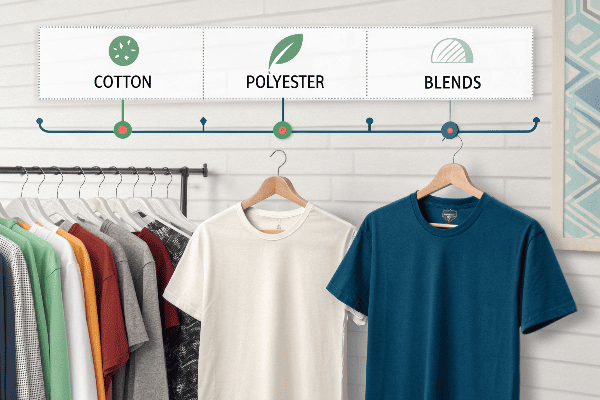
When I buy or produce T-shirts, I notice that prices can be very different. One key reason is fabric. Fabric choice changes how a T-shirt feels, how long it lasts, and how much it costs.
Fabric is one of the main factors that determine T-shirt pricing. High-quality fabrics like organic cotton or bamboo cost more, while blends or polyester are usually cheaper. The type, weight, and treatment of the fabric all affect the price.
Let’s see why fabric matters so much in pricing and how brands decide on costs.
Table of Contents
- Why does fabric affect T-shirt price?
- How do different fabrics affect price?
- Does fabric weight (GSM) change the price?
- How do finishing and treatments affect fabric pricing?
- Can fabric choice be adjusted to match a market?
- How can fabric save costs for a T-shirt brand?
- Conclusion
Why does fabric affect T-shirt price?
Fabric is the base of every T-shirt. Better fabric means a higher base cost.
Different fabrics have different costs to produce and process. A soft organic cotton T-shirt costs more than a basic polyester one because the raw material itself is more expensive.
- Raw material costs: Cotton and bamboo are costlier to grow and harvest.
- Processing: Some fabrics need extra steps like combing or enzyme washing.
- Durability: High-quality fabrics last longer and hold color better.
Learn more about fabric pricing factors from Textile School.
How do different fabrics affect price?
Each fabric has its own price range. Knowing these helps me choose the right fabric for a target market.
Cotton, polyester, blends, bamboo, and organic cotton all come at different prices. Specialty fabrics raise the cost of the final T-shirt.
Cotton
- Soft and breathable.
- Mid-priced.
- Heavyweight cotton costs more.
Polyester
- Cheaper and durable.
- Used for sports or budget products.
Cotton/Poly Blends
- Combine the good parts of both.
- Balanced price, very common for mass production.
Organic Cotton
- Costs more because of sustainable farming.
- Marketed as eco-friendly.
Bamboo or Modal
- Premium fabrics with soft feel.
- Higher prices.
For details about fabric characteristics, visit Fabric.com.
Does fabric weight (GSM) change the price?
Even if two T-shirts use the same fabric, the weight can change the cost.
Higher GSM fabrics cost more because they use more material. A 240 GSM T-shirt is heavier and more expensive than a 160 GSM one.
Approximate GSM and cost relationship
| GSM (grams/sqm) | Type | Price Impact |
|---|---|---|
| 140–160 | Lightweight | Lower cost |
| 180–200 | Standard weight | Medium cost |
| 220–280 | Heavyweight | Higher cost |
You can see GSM effects explained further in Threads Monthly’s fabric weight guide.
How do finishing and treatments affect fabric pricing?
Treatments add value to a T-shirt but also raise the price.
Special finishes like enzyme washing, silicone softening, or moisture-wicking treatments add extra cost on top of the base fabric.
- Enzyme washing: Makes the fabric softer.
- Moisture-wicking: Common in sports T-shirts.
- Antimicrobial treatment: Prevents odor.
Finishing processes and their costs are covered in guides by Apparel Resources.
Can fabric choice be adjusted to match a market?
I always select fabric based on who will buy the T-shirt.
Premium markets prefer organic cotton, heavy fabrics, or bamboo. Mass markets often use blends or lightweight cotton to keep costs low.
- Luxury brand: 240 GSM organic cotton or bamboo.
- Mass retail: 160–180 GSM cotton/poly blends.
How can fabric save costs for a T-shirt brand?
Smart fabric choices help balance quality and cost.
Blends are a good choice because they are cheaper than 100% cotton but still feel comfortable. Choosing a slightly lighter GSM also lowers the price.
- Cotton/poly blends last longer and resist shrinking.
- Small changes in weight can make big differences in production cost.
Conclusion
Fabric is one of the main reasons why T-shirt prices vary. The type, weight, and finish of the fabric all influence the cost, from budget polyester blends to premium organic cotton.
- Fabric cost influences: Textile School
- Fabric characteristics reference: Fabric.com
- Fabric weight and GSM: Threads Monthly
- Finishing techniques: Apparel Resources