
You’ve heard both are smooth and luxurious—but when it comes to skin health, is silk or satin really the better choice?
Silk is generally better for your skin than satin because it's a natural, breathable fiber that’s hypoallergenic and helps retain skin moisture. Satin, especially if made from synthetic fibers, may not be as breathable and can cause irritation for sensitive skin types.[^1]
In my experience sourcing fabrics for premium sleepwear brands, customers with sensitive skin always come back for silk—even when satin looks just as shiny on the surface.
Table of Contents
- Why is silk considered more skin-friendly?
- Can satin also be good for your skin?
- Which is better for hair and face wrinkles?
- Which fabric is better for long-term skin health?
- Conclusion
Why is silk considered more skin-friendly?
It’s not just about softness—silk actually interacts better with your skin.
Silk is a protein-based fiber, similar to human skin, and it naturally regulates temperature and humidity. It’s hypoallergenic, non-irritating, and less likely to cause friction that leads to wrinkles or breakouts.[^2]
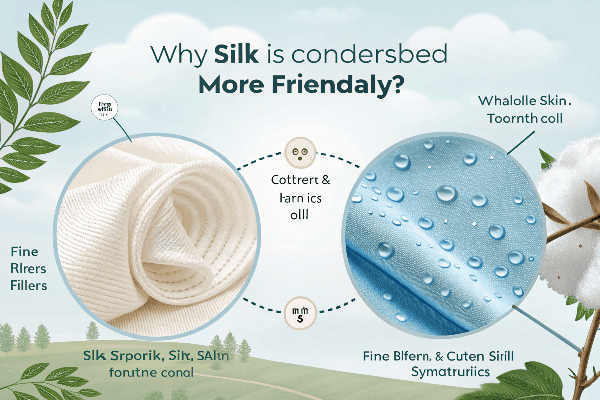
Skin benefits of silk
| Benefit | How Silk Helps Your Skin |
|---|---|
| Moisture retention | Prevents skin dehydration overnight |
| Friction reduction | Less pulling on delicate areas |
| Allergy prevention | Resistant to dust mites & mold |
| Cooling comfort | Reduces sweat and irritation |
That’s why dermatologists and beauty professionals often recommend silk pillowcases for sensitive skin.
Can satin also be good for your skin?
Satin can feel soft—but that doesn’t mean it offers the same skin-friendly benefits.
Satin made from synthetic fibers (like polyester or nylon) can trap heat and moisture, which may lead to clogged pores or irritation for sensitive skin types.
Satin's limitations for skincare
| Concern | Satin Reaction |
|---|---|
| Breathability | Poor—may trap sweat |
| Skin sensitivity | Can cause irritation or redness |
| Acne-prone skin | May worsen breakouts |
| Static buildup | More common with polyester |
Not all satin is bad—but natural-fiber satin (like silk satin) is rare and expensive. Most budget satin is synthetic. Healthline offers a helpful breakdown of the differences.
Which is better for hair and face wrinkles?
Skin doesn’t stop at the neck—pillowcase materials affect your whole skincare routine.
Silk reduces friction, which can help prevent sleep wrinkles and reduce hair breakage. Satin can offer some similar benefits, but only if it’s high quality and tightly woven.
Overnight skincare impact
- Silk keeps your skin and hair in place as you sleep—great for preserving hairstyles and minimizing creases
- Satin may still work, but lower-grade fabrics often bunch up or stick to oily skin
Beauty experts at Byrdie note that silk works especially well for aging skin and hair prone to frizz.
Which fabric is better for long-term skin health?
Think beyond one night—what protects your skin over time?
Silk offers long-term benefits for people with dry, aging, or sensitive skin. It works naturally with the body’s temperature and barrier function. Satin may be enough for occasional use, but silk wins for daily skin care routines.
Which to choose?
| Skin Need | Recommended Fabric |
|---|---|
| Dry or flaky skin | Silk |
| Sensitive or allergy-prone | Silk |
| Oily or acne-prone | Silk |
| General use on a budget | Satin |
For the best of both worlds, some brands offer blended silk-satin—natural on the skin, synthetic on the outside for durability. Check Slip’s official site for luxury silk sleepwear and pillowcases.
Conclusion
Silk is better than satin for skin—especially if you deal with dryness, breakouts, or irritation. It’s breathable, hypoallergenic, and gentle enough for daily contact. Satin is a budget-friendly alternative, but for true skin benefits, silk is worth the investment.
[^1]: Cleveland Clinic – Is Silk Better for Your Skin Than Cotton or Satin?
[^2]: Allure – The Benefits of Silk Pillowcases
[^3]: Healthline – Silk vs. Satin: What’s the Difference?
[^4]: Byrdie – Silk vs. Satin: Which Is Better for Hair and Skin?