
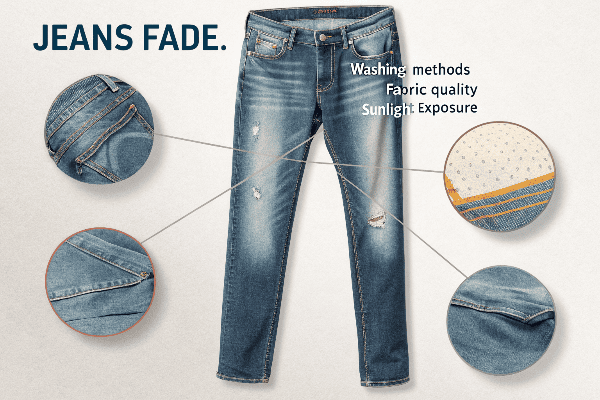
You bought a pair of sharp-looking chinos—clean color, perfect fit. But after a few washes, the color starts to dull. That rich navy becomes a washed-out blue. What happened?
Chinos fade due to the type of dye used, the natural fiber content (usually cotton), and repeated exposure to water, heat, friction, and sunlight. Over time, these factors break down the dye and cause visible color loss.
I had a favorite pair of olive chinos that looked great for the first few months. But after regular wear and washing, they turned a pale, tired green. I thought it was just normal—but then I learned how to slow the fading down.
Table of Contents
- What causes chinos to fade after washing?
- Are certain chino colors more likely to fade?
- How does sunlight contribute to fading?
- Can you slow down the fading of chinos?
- Conclusion
What causes chinos to fade after washing?
It starts with dye and fiber chemistry.
Chinos are usually made of cotton or cotton blends, which are prone to fading because they absorb dye on the surface. With each wash, that dye gets stripped away[^1].
The science behind fabric fading
| Cause of Fading | How It Affects Chinos |
|---|---|
| Water | Loosens dye molecules |
| Detergents | Strip oils and dye from fabric surface |
| Heat (washing/drying) | Weakens fiber and dye bond |
| Friction in machine | Causes dye loss, especially at seams |
Cotton holds dye less deeply than synthetic fibers, which means its color fades more readily unless chemically treated with color-retention finishes[^2].
Are certain chino colors more likely to fade?
Yes—especially darker shades.
Darker chinos (navy, black, olive) fade more visibly than lighter ones because the contrast is more noticeable as dye lifts away[^3].
Colorfastness and visual fading
- Navy / Black chinos: Fade to grey-blue or charcoal
- Olive / Brown chinos: Turn yellowish or washed-out
- Light khaki / beige: Fading is subtle and less obvious
Dark dyes tend to sit on the surface of cotton fabric, making them more vulnerable to wash and UV exposure.
How does sunlight contribute to fading?
UV rays aren’t just for sunburns—they hurt dyes too.
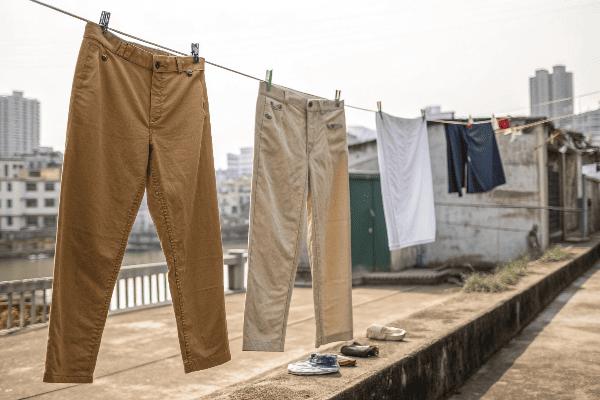
Exposure to sunlight breaks down dye molecules, especially in cotton-based fabrics like chinos, leading to uneven or patchy fading[^4].
Sunlight fading vs. wash fading
| Fading Type | Caused By | Appearance |
|---|---|---|
| Wash fading | Water, detergent, friction | Even loss of color over time |
| Sun fading | UV light | Spotty, uneven discoloration |
Drying or storing chinos in direct sunlight can significantly accelerate fading, according to Smithsonian conservation studies.
Can you slow down the fading of chinos?
Yes—with smart washing and care.
Turn chinos inside out before washing, use cold water, mild detergent, and air dry in shade. Wash only when needed, and avoid over-drying[^5].
Fabric care tips for chinos
- Wash on gentle cycle with cold water
- Use color-preserving detergent (e.g., Woolite Darks[^6])
- Avoid bleach or harsh stain removers
- Air dry or tumble on low with inside-out fabric
- Store away from windows or sunlight
Brands like Levi’s recommend washing jeans and chinos as infrequently as possible to retain color and structure.
Conclusion
Chinos fade because of cotton fiber structure, surface dyes, and everyday wear. With the right care—cold washes, mild detergents, and avoiding sun—you can preserve their color and keep them looking sharp longer.
[^1]: The Laundress. “How to Prevent Fading Clothes.” Link
[^2]: Good Housekeeping. “Why Do My Clothes Fade?” Link
[^3]: Levi’s. “Care Tips for Colored Jeans & Chinos.” Link
[^4]: Smithsonian Museum Conservation Institute. “Light & Ultraviolet Damage.” Link
[^5]: REI Co-op. “How to Wash Hiking Pants and Performance Cotton.” Link
[^6]: Woolite. “Woolite Darks Keeps Colors Like New.” Link