

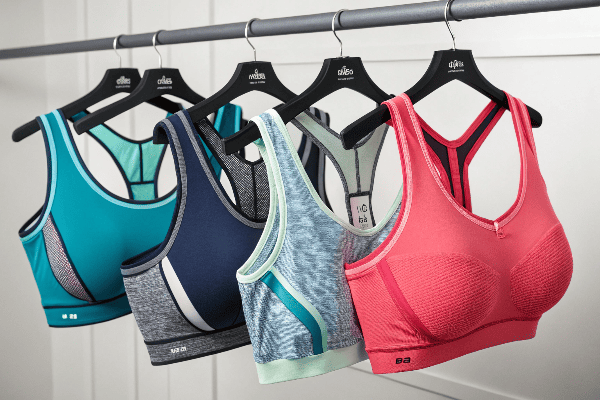
You wear your favorite sports bra every week—but after a few months, the fabric pills, the band stretches, and the support weakens. What happened? The material happened.
The durability of sports bras heavily depends on the material. Synthetic blends like nylon and polyester offer better longevity and stretch recovery, while cotton is soft but wears out faster with sweat and motion.
I learned this the hard way. I bought a soft cotton sports bra thinking it would be breathable and comfy. It was—for a few washes. But it quickly lost shape and started to fray. That’s when I began researching fabrics before buying.
Table of Contents
- What materials are commonly used in sports bras?
- Why is cotton less durable than synthetics in sports bras?
- How do synthetic materials improve sports bra lifespan?
- Can the fabric weight and weave affect durability?
- How to choose a durable sports bra based on material?
- Conclusion
What materials are commonly used in sports bras?
Most sports bras use a mix of synthetic and natural fibers.
The most common materials in durable sports bras are polyester, nylon, spandex (elastane), and sometimes cotton. Each offers different trade-offs in stretch, moisture management, and lifespan[^1].
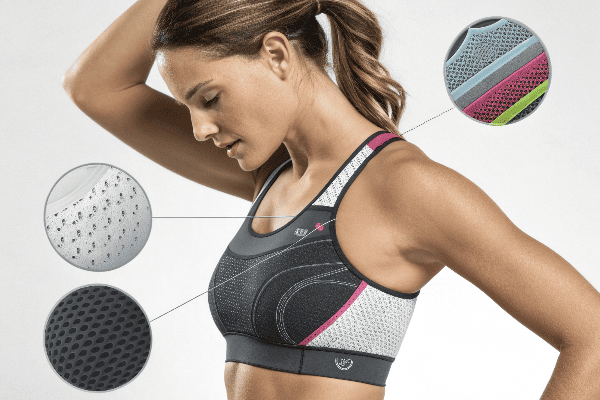
Material comparison chart
| Material | Durability | Stretch Recovery | Moisture Wicking | Breathability | Downsides |
|---|---|---|---|---|---|
| Polyester | High | Good | Excellent | Moderate | Can retain odor |
| Nylon | Very High | Excellent | Excellent | Moderate | Slightly less soft |
| Spandex | High | Excellent | Low | Low | Degrades from heat |
| Cotton | Low | Poor | Poor | High | Shrinks, wears quickly |
Blended fabrics are often used to combine the best features—for example, nylon-spandex blends offer stretch and shape retention[^2].
Why is cotton less durable than synthetics in sports bras?
It can’t handle sweat or stretch well.
Cotton absorbs moisture, stretches out easily, and breaks down faster when washed often—making it less ideal for long-term use in sports bras[^3].
How cotton breaks down over time
- Sweat sits in the fibers, weakening the structure
- Cotton loses elasticity after repeated wear
- It pills easily and can shrink in hot washes
- It takes longer to dry, leading to mildew or odor
Cotton Inc. notes that while cotton excels in softness, it’s not ideal for high-intensity activity or repeated washing without breakdown.
How do synthetic materials improve sports bra lifespan?
They're designed for performance and recovery.
Synthetics like nylon and polyester resist wear, bounce back after stretching, and handle repeated washing better than natural fibers[^4].
Why synthetics work
- Nylon is abrasion-resistant and keeps shape
- Polyester repels moisture and dries fast
- Spandex gives flexibility and bounce-back
- Blends resist pilling and support muscle movement
Healthline confirms synthetic blends are preferred for activewear durability due to their recovery and breathability properties[^5].
Can the fabric weight and weave affect durability?
Absolutely. It’s not just the fiber—it’s how it’s made.
Yes, denser weaves and higher GSM (grams per square meter) fabrics tend to last longer. Tight-knit compression fabrics hold their shape better than loose weaves[^6].
What to look for
| Fabric Spec | Durability Effect |
|---|---|
| GSM (Fabric Weight) | Heavier fabrics are more robust |
| Weave Tightness | Tighter knits offer better stretch support |
| Finish | Anti-pilling or moisture-wicking finishes extend life |
Brands rarely list this directly, but performance-focused products like Lululemon's sports bras often include proprietary blends designed for durability.
How to choose a durable sports bra based on material?
Start by checking the tag and feeling the fabric.
Look for blends with 70–90% nylon or polyester, 10–20% spandex, and avoid high-cotton content if durability is your priority[^7].
Checklist before buying
- Does the fabric feel firm and bounce back when stretched?
- Is it labeled moisture-wicking or quick-dry?
- Does it include spandex/elastane for flexibility?
- Is the stitching reinforced, especially at stress points?
A study by the National Library of Medicine found that compression fabrics with high elastane content offered better performance under stress[^8].
Conclusion
Material makes or breaks a sports bra’s lifespan. Synthetic blends stretch, breathe, and bounce back—while cotton wears down fast. Choose wisely, and your support will last.
[^1]: REI. “How to Choose and Care for a Sports Bra.” Link
[^2]: Under Armour. “Women’s Sports Bras.” Link
[^3]: Cotton Incorporated. “Cotton Fiber Properties.” Link
[^4]: Harvard Health. “Performance Fabrics vs Natural Fibers.” Link
[^5]: Healthline. “The Best Materials for Workout Clothes.” Link
[^6]: Textile School. “Fabric Weight and GSM Explained.” Link
[^7]: Lululemon. “Sports Bra Technology.” Link
[^8]: PubMed Central. “Effect of Fabric Compression on Exercise Support.” Link